EVA mousse durable personnalisée pour les accessoires de yoga : options écologiques pour les marques de luxe
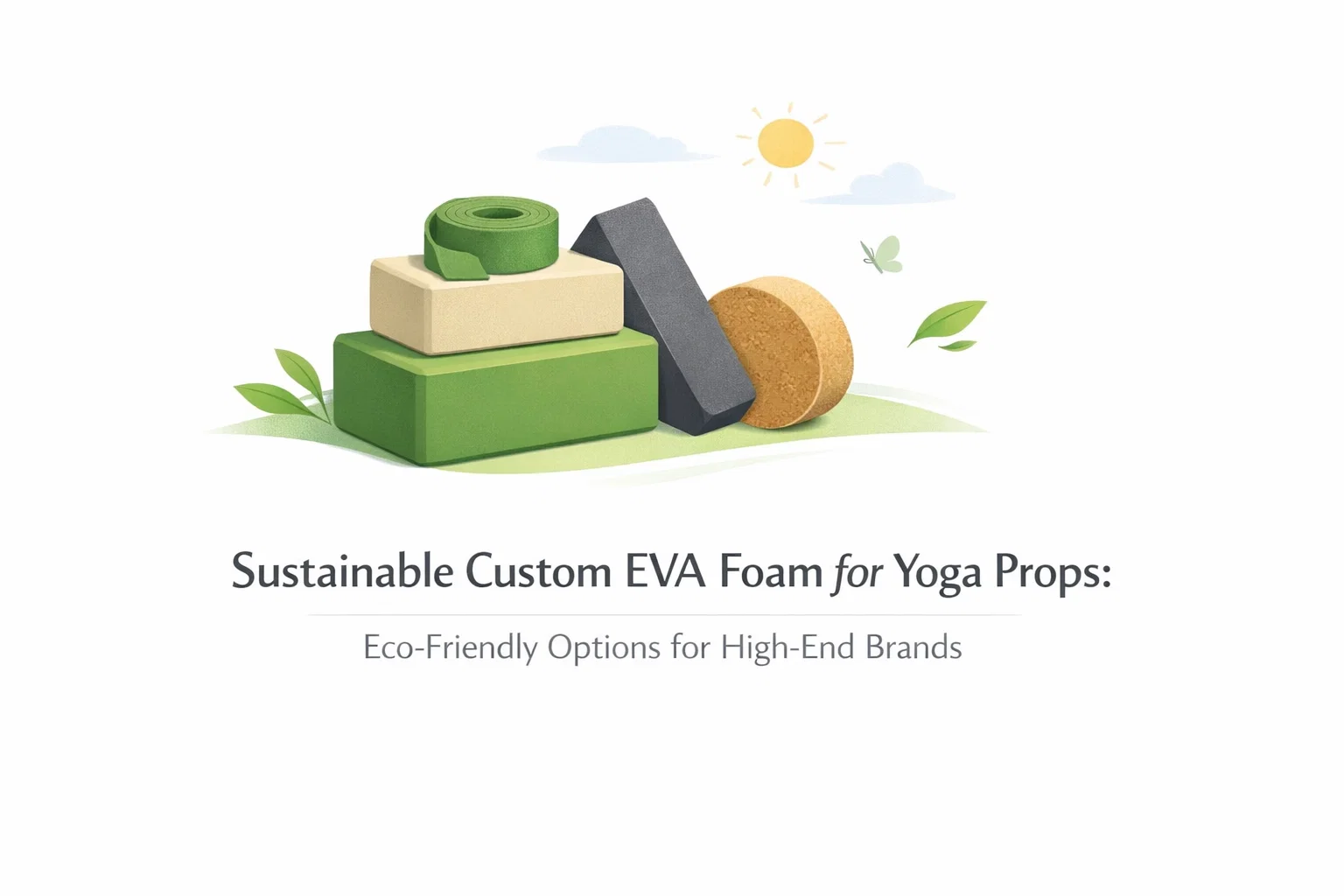
High-end yoga brands face a persistent challenge: balancing product performance with environmental responsibility. Advanced manufacturing techniques now allow brands to produce sustainable EVA yoga props without sacrificing density or grip. Damao Tech engineers custom eco-friendly formulations that match the exact specifications of premium studio gear.
Analyzing the Standard: EVA Foam for Alo Yoga
Premium brands set strict parameters for their equipment. Products like the Alo Yoga Uplifting Yoga Block rely on a specific formulation of 100% EVA foam [1]. This material provides distinct advantages over traditional cork or soft foam options.
- Density Parameters: The block features a 330 GSM high-density foam structure. This creates a surface almost as firm as cork but significantly lighter for transport.
- Safety Specifications: The formulation remains phthalate-free and metal-free to meet health standards.
- Grip Performance: Beveled edges and a closed-cell surface prevent moisture absorption and slipping during practice.
Achieving this level of quality requires precise control over the foaming and cross-linking process. When brands source custom eco EVA foam, they must ensure the manufacturer can match or exceed these structural parameters. Damao Tech replicates this high-density profile while integrating sustainable feedstocks.
Engineering Custom Eco EVA Foam
Replacing petrochemicals with sustainable alternatives changes the chemistry of the foam. Manufacturers employ three primary methods to create eco-friendly EVA options.
- Bio-Based Ethylene: Refineries extract ethanol from sugarcane to replace petroleum-derived ethylene. This plant-based approach reduces greenhouse gas emissions during production while maintaining identical physical properties [2].
- Algae Blends: Suppliers blend harvested algae biomass with EVA resin. This process cleans aquatic ecosystems while reducing the total plastic volume in the final product.
- Closed-Loop Recycling: Facilities grind production scraps—like excess sheets and trimmings—into pellets. These pellets re-enter the manufacturing cycle, preventing industrial waste from reaching landfills [3].
Damao Tech applies these sustainable pathways to develop custom materials. Brands can specify the exact ratio of bio-based or recycled content required to meet their environmental targets.
Selection Criteria for Sustainable Yoga Props
Selecting the right material requires evaluating both performance metrics and environmental certifications. High-end studios demand props that withstand heavy daily use.
- Firmness Ratings: Blocks require a 40–50 Shore C hardness for proper joint support. Mats and wedges need lower hardness levels for cushioning.
- Structure cellulaire : Closed-cell foam prevents sweat and bacteria penetration. This extends the product lifespan and simplifies studio cleaning protocols.
- Material Certifications: Verify that the foam passes REACH and RoHS compliance testing. This guarantees the absence of toxic heavy metals and harmful plasticizers.
Acceptance Checks and Maintenance
Quality control ensures each production run meets the brand’s specifications. Implement these specific acceptance checks when receiving sustainable EVA yoga props.
- Weight Verification: Weigh random samples to confirm consistent density (e.g., 330 GSM).
- Compression Testing: Apply pressure to the block to ensure it resists denting and returns to its original shape immediately.
- Surface Inspection: Check for uniform texture, clean beveled edges, and the absence of air bubbles.
Proper maintenance preserves the integrity of eco-friendly foam. Wipe the surface with a damp cloth and mild soap after use. Air dry the props away from direct sunlight to prevent bio-based polymers from degrading prematurely.
Questions fréquemment posées
Are sustainable EVA yoga props biodegradable? Standard EVA foam does not biodegrade. However, specific bio-based formulations and additives can accelerate the breakdown process under specific landfill conditions [4]. The most sustainable current approach involves mechanical recycling and using renewable feedstocks.
How does sugarcane EVA compare to traditional EVA? Sugarcane-derived EVA serves as a direct drop-in replacement. It possesses the exact same molecular structure, flexibility, and durability as petroleum-based EVA. This plant-based approach significantly lowers the total carbon footprint of the final product.
Can you match the density of the EVA foam for Alo yoga blocks? Yes. Damao Tech adjusts the foaming agents and mold pressure to achieve a dense, 330 GSM specification. This provides the rigid support required by premium brands.
Secure Your Sustainable Supply Chain
Sourcing the right material dictates the success of your product line. Damao Tech supplies the exact formulation you need to build high-performance, eco-conscious studio equipment.
Would you like me to send you a material data sheet or provide a custom quote for your next production run? Contact our engineering team today to request material samples.