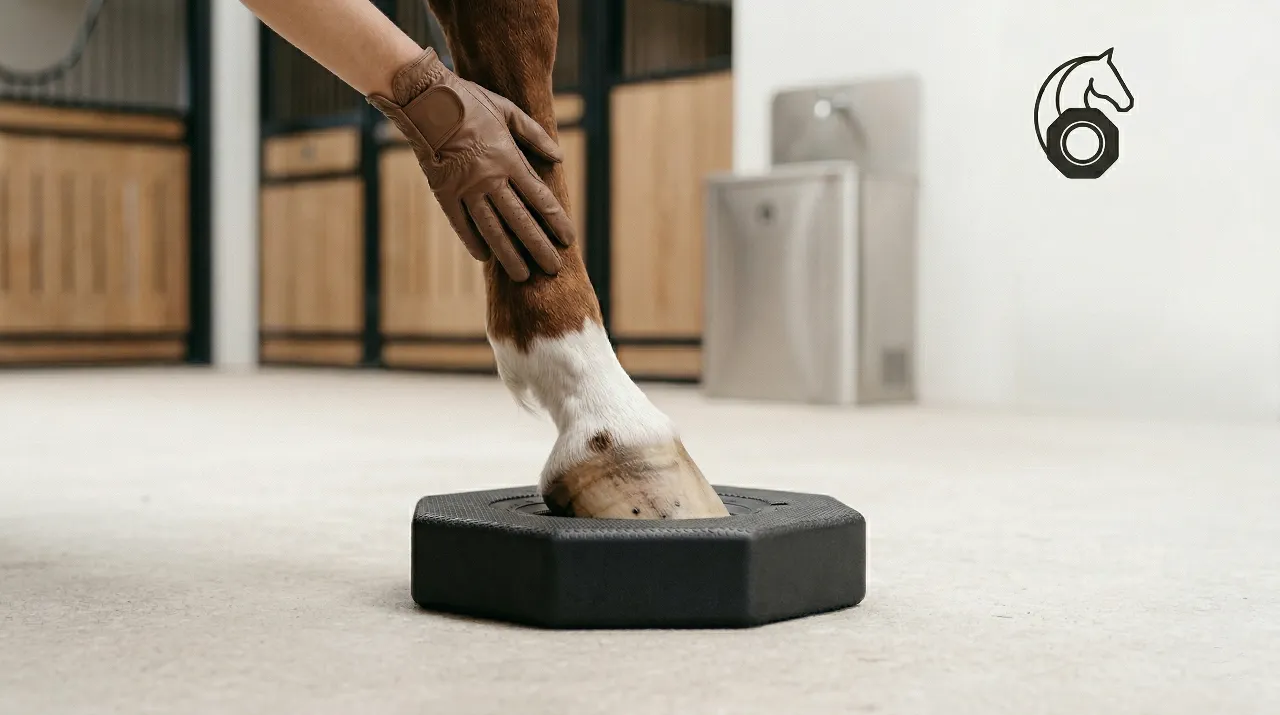
Equine balance pads are widely used in horse rehabilitation, stability training, and conditioning because they create a controlled unstable surface that encourages small postural adjustments. When the material is specified correctly, these pads can support proprioception work, help trainers build better body awareness, and give veterinary teams a practical tool for progressive rehab programs. At Damao Tech, we manufacture custom EVA foam equine balance pads for brands, distributors, clinics, and equine training facilities that need stable quality, repeatable density, and OEM flexibility.
What Are Equine Balance Pads Used For?
Equine balance pads are foam platforms placed under one or more hooves during supervised exercises. Because the surface compresses and shifts under load, the horse must make continuous micro-adjustments through the limbs, core, and supporting muscle groups. This makes horse balance pads useful in both clinical and performance settings.
- Rehabilitation programs after tendon, ligament, or soft tissue recovery
- Daily stability and proprioception work for sport horses
- Conditioning routines for young horses and horses returning to work
- Low-impact support exercises for senior horses that need careful management
- Training programs that focus on posture, coordination, and controlled weight shifting
Why EVA Foam Works Well for Equine Balance Pads
EVA foam is a practical material choice for equine rehabilitation pads because it is lightweight, durable, and easier to tune than many generic foam options. The right EVA formulation can deliver the compression response needed for balance training while still holding its shape through repeated use.
- Consistent compression: Helps deliver a repeatable training feel from batch to batch
- Closed-cell structure: Better resistance to moisture pickup and easier cleaning after barn or clinic use
- Low weight: Easier for trainers and therapists to carry, position, and store
- Durabilidade: Suitable for repeated stepping, compression, and daily handling when the density is chosen correctly
- Custom processing: Supports custom thickness, shape, embossing, color, logo, and packaging for OEM supply
Where Equine Rehabilitation Pads Are Commonly Used
Veterinary Clinics and Rehabilitation Centers
Clinics often use equine rehabilitation pads in supervised recovery plans where balance, controlled loading, and confidence-building are important. The goal is not to create maximum instability, but to give the horse a safe and progressive surface that matches the stage of recovery.
Training Barns and Performance Programs
For trainers, horse balance pads can be part of warm-up routines, core engagement work, and off-season conditioning. They are especially relevant when teams want to add coordination work without high-impact loading.
Retail and Private Label Equine Brands
Brands and distributors usually need more than just a foam block. They need controlled density, clean cutting, a stable supply chain, custom dimensions, and packaging that matches their market. This is where a custom EVA foam manufacturer adds value.
How to Choose the Right Density, Thickness, and Size
There is no single best specification for every horse. Softer and thicker pads usually create more movement, while firmer or thinner pads feel more controlled. A good product program starts by defining the use case, horse size, exercise intensity, and cleaning environment.
| Use Scenario | Suggested Density Range | Common Thickness | Buying Notes |
|---|---|---|---|
| Introductory rehab and supervised recovery | Lower to medium density | 75-100 mm | Prioritize controlled support, surface grip, and predictable compression |
| General conditioning and balance work | Medium density | 50-75 mm | Look for durability, easy cleaning, and batch consistency |
| Advanced stability training | Medium to high density | 40-60 mm | Useful when less sink and faster response are preferred |
| Heavy-duty or frequent-use environments | Higher density | 30-50 mm | Important for commercial barns, therapy centers, and repeated daily use |
For B2B buyers, the key questions are usually simple: Can the supplier hold density consistently? Can the pad be cut cleanly to the required shape? Is the surface easy to clean? Can the factory support OEM branding, custom packaging, and repeat orders without quality drift?
Custom Manufacturing Options from Damao Tech
Damao Tech supplies EVA foam components and finished pads for equine applications with a focus on OEM and wholesale programs. We work with buyers who need product customization as well as dependable manufacturing execution.
- Custom sizes, thicknesses, densities, and hardness targets
- Rectangular, wedge, layered, and special-cut pad formats
- Embossed or textured surfaces for grip and product differentiation
- Private label logo, barcode, instruction insert, and retail-ready packaging
- Sample development for fit, feel, and performance validation before bulk production
If you are sourcing equine balance pads for a clinic, distributor, or brand, it is worth validating pad response, edge finish, anti-slip behavior, and cleaning performance before finalizing mass production.
Cleaning, Handling, and Safety
Horse balance pads should always be used under supervision and introduced progressively. Even well-designed pads need the correct exercise plan and environment to be safe and effective.
- Start with short sessions and a calm introduction to the surface
- Use on a secure, non-slip floor with enough room around the horse
- Increase challenge gradually based on the horse’s condition and professional guidance
- Clean the pad after use to reduce dirt and moisture buildup
- Inspect compression set, tearing, and surface wear as part of routine equipment checks
FAQ About Equine Balance Pads
What density is best for equine balance pads?
The best density depends on the horse, the exercise goal, and the level of instability required. Rehab programs often start with more supportive specifications, while advanced conditioning may use firmer pads with a faster response.
Are EVA foam horse balance pads easy to clean?
Yes. Closed-cell EVA foam is generally easier to wipe down and manage than absorbent open-cell materials, which is one reason it is widely used in clinic, training, and industrial applications.
Can equine rehabilitation pads be customized for private label programs?
Yes. OEM buyers commonly request custom size, density, color, logo, packaging, and multi-piece sets. Sampling is recommended before final production so the balance feel and finish can be confirmed.
How should buyers evaluate a supplier?
Look beyond price. Material consistency, processing quality, lead time stability, sample accuracy, and communication during product development all matter when you plan to sell or use the pads long term.
Final Thoughts
Well-made equine balance pads can support rehabilitation, conditioning, and daily stability work when the foam specification matches the real application. For brands and professional buyers, the right manufacturing partner should offer more than generic foam. The supplier should be able to support custom density, repeatable production, OEM development, and practical product feedback from sampling to bulk delivery.
If you are developing a horse balance pad line or sourcing equine rehabilitation pads in EVA foam, Damao Tech can help with sample evaluation, custom specifications, and wholesale production planning.