EVAフォーム材料製造の究極ガイド
Ethylene-Vinyl Acetate, better known as EVA foam, is one of the most versatile and widely used materials in modern industry. From the protective packaging of sensitive electronics to the comfortable soles of your favorite running shoes, its unique properties make it an indispensable resource. But have you ever wondered how this remarkable material is made?
At Damao Tech, we specialize in the entire lifecycle of this material, from raw components to precision-finished products. This guide will walk you through the intricate process of EVA foam material manufacture, showcasing the expertise and technology required to create a product that meets the highest standards of quality and performance.
What Exactly is EVA Foam? The Science Behind the Versatility
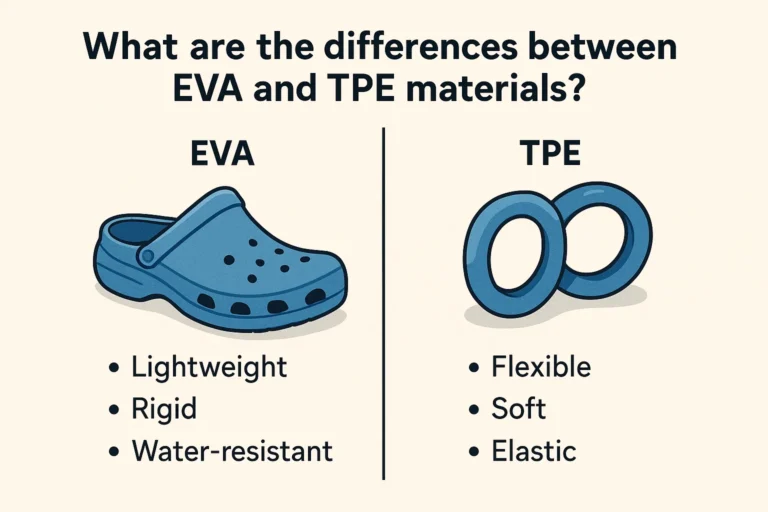
Before diving into the manufacturing process, it’s important to understand what EVA foam is. EVA is a copolymer of ethylene and vinyl acetate. The magic happens during the manufacturing process, where this polymer is expanded into a “closed-cell” foam.
This closed-cell structure is key to its most valued properties:
- Lightweight & Buoyant: The trapped gas bubbles make it incredibly light and unable to absorb water.
- Exceptional Shock Absorption: It can withstand significant impact, protecting whatever it encases.
- Flexibility & Durability: It remains flexible at low temperatures and is resistant to cracks, UV radiation, and weathering.
- 熱伝導遮断: It effectively resists heat transfer.
These characteristics make it a superior choice for a vast range of applications, a topic we’ll explore further.
The EVA Foam Material Manufacture Process: A Step-by-Step Look
Creating high-quality EVA foam is a multi-stage process that demands precision, expertise, and advanced machinery. At Damao Tech, we have perfected each step to ensure consistency and excellence in every batch.
Step 1: Compounding the Raw Materials
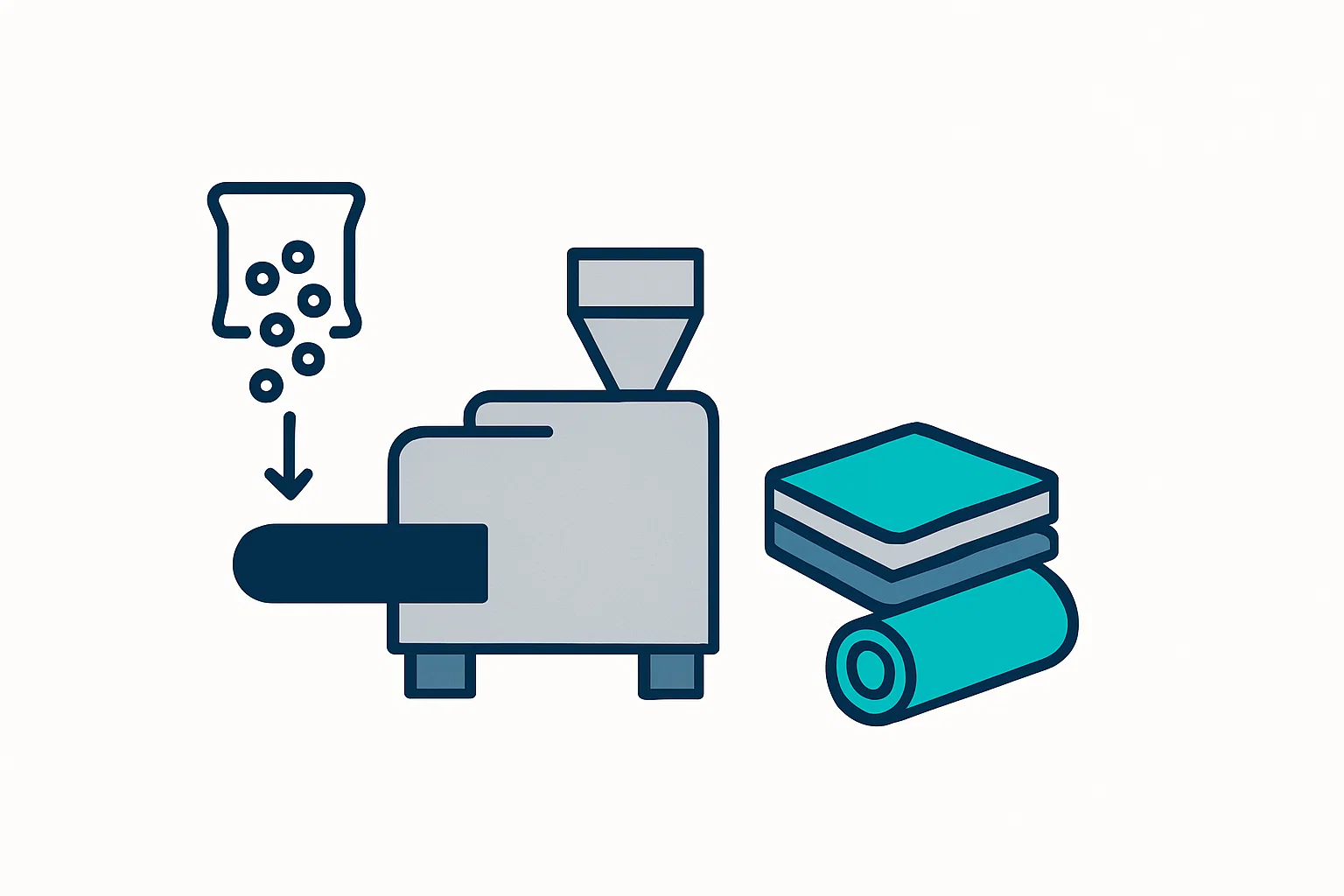
The journey begins with a precise recipe. We start with raw EVA polymer pellets and mix them with several critical additives in a large-scale industrial blender. These additives include:
- Blowing Agents: These chemicals decompose at high temperatures to release gas (like nitrogen), which creates the foam’s cellular structure.
- Cross-linking Agents: These facilitate the formation of strong chemical bonds between polymer chains, giving the foam its durability and “memory.”
- Fillers & Pigments: Fillers can adjust the foam’s density and cost, while pigments provide the desired color.
The exact ratio of these components is a proprietary formula, tailored to achieve the specific density, hardness, and color requested by our clients.
Step 2: Kneading and Molding
Once compounded, the mixture is heated and kneaded into a homogenous, dough-like mass. This ensures all additives are evenly distributed. The molten material is then carefully transferred into large, high-pressure molds. The size of the mold determines the initial dimensions of the raw foam “bun” or block.
Step 3: Foaming and Curing
This is where the transformation occurs. The filled molds are placed into a hydraulic press that applies immense pressure and heat. The high temperature activates the blowing agent, releasing gas, and the cross-linking agent, which solidifies the polymer network. The pressure contains this expansion until the mold is opened. Upon release, the solid block expands rapidly to its final size, much like a loaf of bread rising.
Step 4: Stabilization
新たに膨張させた発泡バンズは熱くて不安定です。一定期間の冷却と安定化のため、慎重に冷却と安定化エリアに移動されます。この硬化プロセスにより、発泡体の内部構造が安定し、最終的な特性(寸法、硬さ、細胞サイズなど)が安定して一貫しています。.
From Raw Buns to Finished Products: Damao Tech’s Capabilities
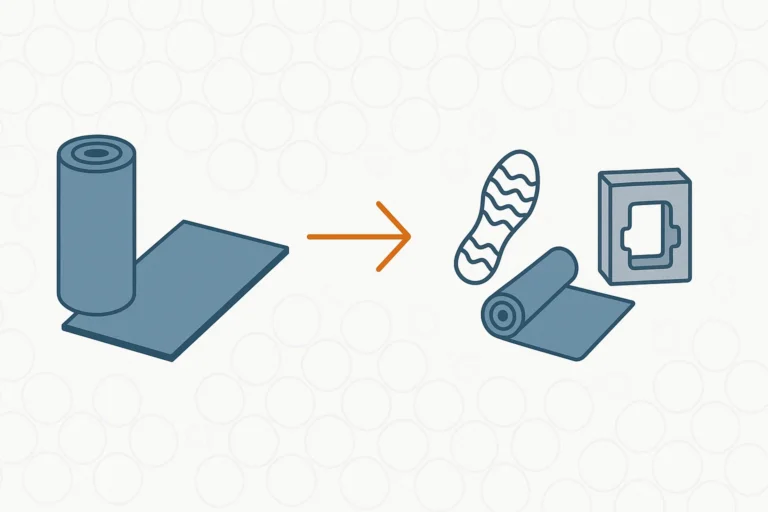
原料の発泡バンズは始まりに過ぎません。ダマオテックの専門知識は、これらの大きなブロックを応用に適した利用可能な形式に変換することにまで及びます。.
- EVA Foam Panels: 我々は特殊なスライディングおよびスプリッティングマシンを使用して、数ミリメートルから数インチの厚さの正確な厚さのパネルおよびシートに大きなバンズをスライスします。.
- EVA Foam Rolls: 継続的な柔軟な材料が必要な応用において、自動化生産ラインや大規模な層積層に適したロール形態のEVA発泡体を生産できます。.
- Custom Fabricated Items: ここで我々の経験が光ります。ダイヤカット、CNCルーティング、熱層積層、アダブスバックイングなどの先進技術を使用して、我々の幅広い製品線を、お客様の正確な仕様に合わせたカスタム設計の部品、インサート、ガスケット、および完成品に変換できます。 EVAフォーム Key Applications of High-Quality EVA Foam.
我々が製造するEVA発泡体の多機能性により、数多くの産業に役立つことができます:
Custom-cut inserts for tool cases, electronics, and medical equipment.
- パッケージ: ヨガマット、ジムフロアリング、保護パッド、およびウォータースポーツ機器。.
- スポーツ・レジャー: Gaskets, seals, interior trim, and NVH (noise, vibration, and harshness) components.
- 車輌: デッキング、浮力補助具、および座面マットレス。.
- 海上: Midsoles, insoles, and orthopedic supports.
- 靴: Why Partner with Damao Tech for Your EVA Foam Needs?.
EVA発泡体のニーズにおけるダマオテックとのパートナーシップを選ぶ理由
Choosing the right manufacturing partner is critical. At Damao Tech, we build our reputation on the E-E-A-T principles:
- Experience: 数年間の実践経験により、発泡体製造のニュアンスを理解しています。.
- 私たちは素材科学と手袋の適用について深い理解を持っています。 Our team possesses deep technical knowledge of polymer science and manufacturing technology.
- Authoritativeness: 我々は単なるサプライヤーではなく、応用に最適な材料選択をクライアントに導くソリューションプロバイダーです。.
- Trustworthiness: 我々は厳格な品質管理、納期守り、透明なコミュニケーションにコミットしており、お客様に信頼できる製品を届けることを確実にしています。.
常に質問(FAQ)
1. What is the difference between open-cell and closed-cell foam?
EVA発泡体は閉孔泡沫であり、内部の細胞が互いに接続されていないことを意味します。これは、開孔泡沫(キッチンスポンジのようなもの)と比べて防水性、耐久性、硬さが高いことを意味します。開孔泡沫は液体を容易に吸収します。.
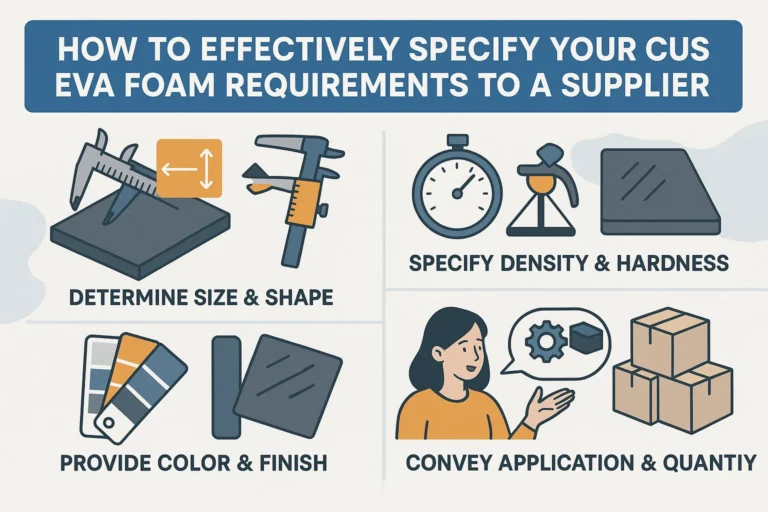
2. Can EVA foam be customized in terms of color, density, and hardness?
Absolutely. During the initial compounding stage of the EVA foam material manufacture process, we can introduce pigments to match specific brand colors and adjust the formulation to achieve a wide range of densities (weight) and durometers (hardness).
3. Is EVA foam recyclable?
While not biodegradable, EVA foam is technically recyclable. At Damao Tech, we are committed to sustainable practices by minimizing waste during production and exploring recycling programs for post-industrial scrap.
次のプロジェクトを始める準備はできていますか?
高品質のパネル、多様なロール、または完全にカスタマイズされた精密加工部品が必要かどうかに関わらず、Damao Techはあなたのビジョンを実現するための専門知識と製造能力を持ち合わせています。私たちのチームは、あなたの要件について話し合い、パフォーマンスと予算ニーズに合った解決策を提供する準備ができています。 EVAフォーム 今日中に連絡をいただき、見積もりを依頼するか、私たちの泡の専門家と話すことをお願いします!
2025年6月28日