EVA Foam Manufacturing Process: From Polymer Resin to Finished Sheets
- Damao Tech
- EVA Foam
- 16 Sep, 2025
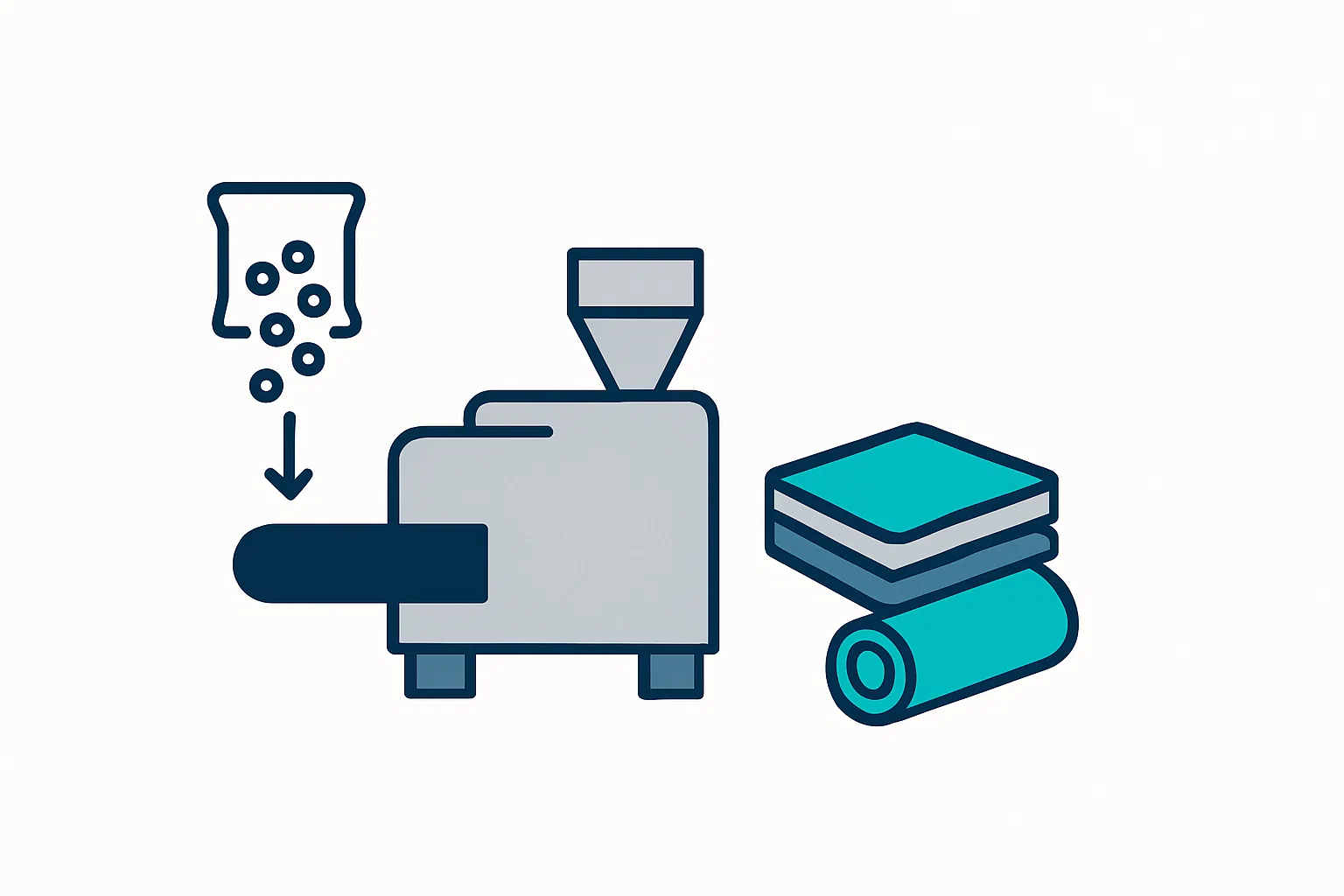
The production of high-performance Ethylene-Vinyl Acetate (EVA) foam is a multi-stage chemical and mechanical process that requires precise control over temperature, pressure, and timing. By adjusting the chemical formulation and expansion ratios, manufacturers can tailor the foam’s density, hardness, and elasticity for specific industrial applications. This guide details the technical stages involved in the manufacture of professional-grade EVA foam.
1. Resin Compounding and Formulation
The process begins with the compounding of raw EVA polymer resin pellets. The final properties of the foam are determined by the ratio of ethylene to vinyl acetate (VA) in the base resin.
- Additive Integration: The resin is mixed with blowing agents (typically Azodicarbonamide or AC), cross-linking agents (such as Dicumyl Peroxide or DCP), and functional additives (UV stabilizers, fire retardants, or pigments).
- Uniform Distribution: High-speed blenders ensure a homogenous mixture, which is critical for achieving a consistent cell structure across the entire production batch.
2. Kneading and Thermal Homogenization
The compounded mixture is fed into a specialized kneading machine or internal mixer (Banbury mixer).
- Melting: The material is heated to its melting point while being mechanically sheared.
- Dispersion: The kneading process ensures that the blowing and cross-linking agents are perfectly dispersed within the polymer matrix. Any clumps or uneven distribution at this stage would result in structural defects (voids or weak spots) in the final foam bun.
3. High-Pressure Molding and Cross-Linking
The molten material is then placed into a high-pressure hydraulic press.
- Pressurization: The press applies immense heat and pressure (typically exceeding 150°C and several hundred psi).
- Cross-Linking: Under these conditions, the cross-linking agents activate, forming permanent covalent bonds between the polymer chains. This transforms the EVA from a thermoplastic into a thermoset-like material with “shape memory.”
4. The Expansion Stage (The “Pop”)
The most critical moment in EVA manufacturing occurs when the press is suddenly opened.
- Sudden Expansion: As the pressure is released, the gases generated by the blowing agents expand instantaneously. The material “pops” out of the mold, expanding to several times its original volume.
- Cell Formation: The speed of this expansion determines the density and cell size of the foam. A faster expansion results in lower density, while a controlled, slower expansion produces the high-density foam used in marine and industrial applications.
5. Curing and Structural Stabilization
The freshly expanded foam block, known as a “bun,” is extremely hot and physically unstable.
- Curing Cycle: The buns are moved to a temperature-controlled stabilization area. They must cool gradually to allow the internal cell pressure to equalize with the ambient atmosphere.
- Dimensional Stability: If the buns cool too rapidly, they may warp or shrink significantly. Proper curing ensures that the final sheets maintain their dimensions and Shore hardness over time.
6. Finishing: Skiving and Custom Fabrication
Once stabilized, the raw foam bun is ready for conversion into usable formats.
- Skiving (Splitting): High-precision horizontal splitting machines slice the bun into sheets of exact thickness, ranging from 1.0mm to 100mm.
- Secondary Processing: The sheets can then be laminated with adhesives (PSA), CNC-routed into custom inserts, or die-cut into gaskets according to client requirements.
Summary
The manufacture of EVA foam is an engineering discipline that balances chemical kinetics with mechanical precision. At Damao Tech, we control every variable—from resin purity to curing times—to ensure our EVA foam meets the highest global standards for performance and reliability. Learn more about our custom EVA foam fabrication services to see how we transform these raw materials into your final product.