EVA Foam Density Chart: 10–40 Shore C Sheets, PCF & kg/m³
- Damao Tech
- EVA Foam
- 03 Oct, 2026
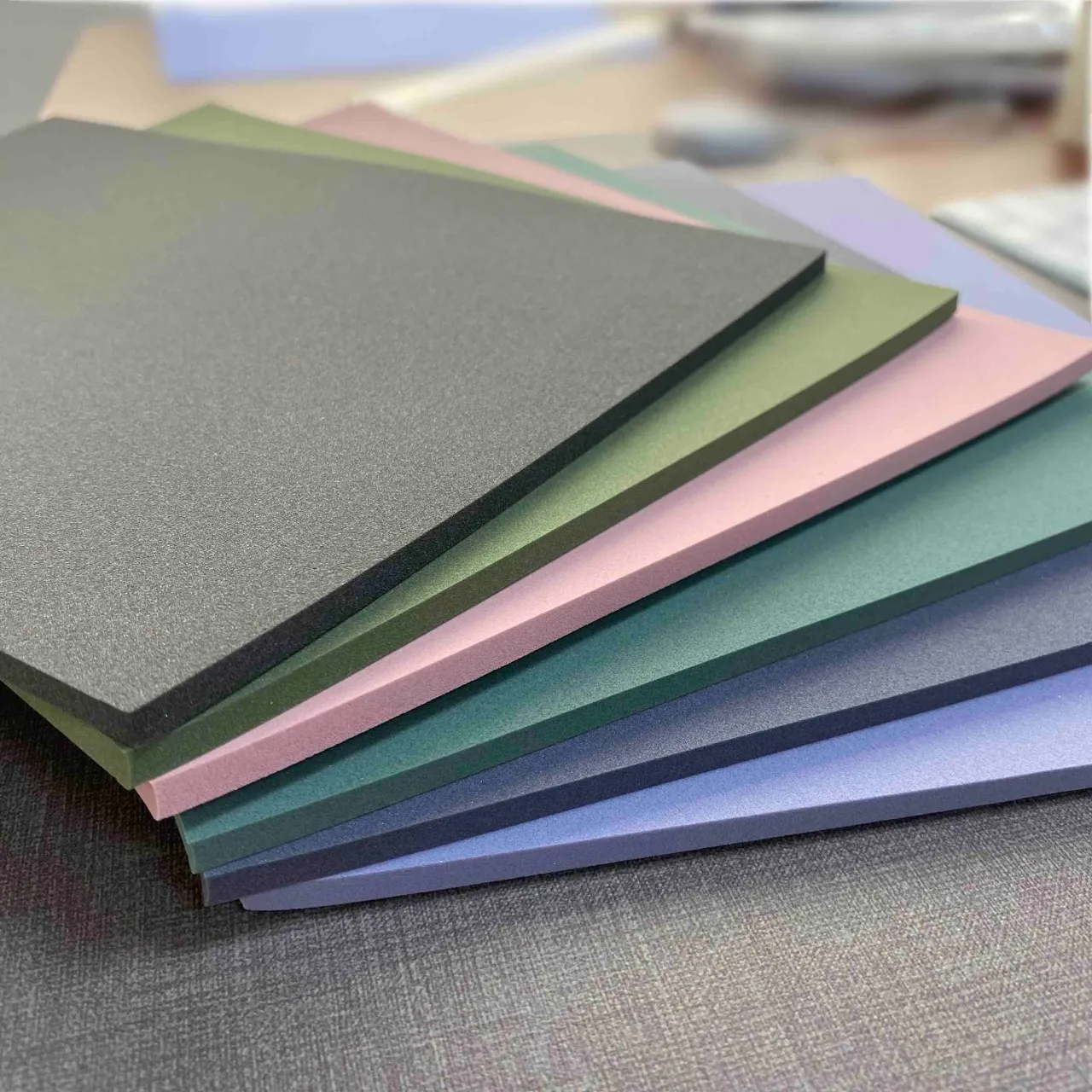
EVA foam density is measured in kg/m³ or PCF and usually runs 33–280 kg/m³ (2.0–17.5 PCF). A 10 Shore C foam sheet is the soft, low-density end (padding, yoga blocks, light inserts). A 40 Shore C foam sheet is the mid-firm packaging and liner grade. Harder sheets move into Shore A and are used for gaskets and load-bearing parts.
The chart below converts density to Shore C / Shore A so you can spec a sheet without mixing up hardness and mass.
What Does EVA Foam Density Mean?
EVA foam density is the actual mass of the structural polymer divided by its total volume. In international trade, this physical measurement is expressed in kg/m³, while US manufacturers often specify it in PCF (pounds per cubic foot).
Because density measures the total amount of raw polymer injected into the foam’s microscopic cell walls, it directly dictates how the foam responds to pressure:
- Low Density (< 60 kg/m³ / < 3.7 PCF): Contains a high gas-to-polymer ratio. It produces an ultra-lightweight foam with extreme compressibility and soft feel, but it will bottom out under heavy loads.
- High Density (> 150 kg/m³ / > 9.3 PCF): Contains a low gas-to-polymer ratio. It produces a solid, heavier block capable of severe load resistance without flattening. It holds cleaner cut edges but comes at a higher material cost.
Technical EVA Foam Density & Hardness Chart
Selecting the wrong density range can cause immediate structural breakdown or unnecessary material costs. Reference this standard metric and imperial chart to map physical ratings against your exact performance requirement.
(Note: 1 kg/m³ = 0.0624 lb/ft³)
| Density Category | Density (kg/m³) | Density (lb/ft³ / PCF) | Shore Hardness Range | Common B2B Applications |
|---|---|---|---|---|
| Ultra-Low Density | 33 – 60 | 2.0 – 3.7 | 15 – 25 Shore 00 | Yoga blocks, soft packaging, retail inserts |
| Low-Medium Density | 60 – 100 | 3.7 – 6.2 | 25 – 40 Shore C | General packaging inserts, protective padding |
| Medium-High Density | 100 – 150 | 6.2 – 9.3 | 40 – 55 Shore C | Orthotics, case liners, marine backing |
| High Density | 150 – 220 | 9.3 – 13.7 | 30 – 45 Shore A | Tool trays, industrial gaskets, heavy pads |
| Ultra-High Density | 220 – 280 | 13.7 – 17.5 | 45 – 60 Shore A | Machine gaskets, structural spacers, wheels |
Density vs. Hardness: Resolving the Confusion
Engineers and buyers frequently confuse density with hardness.
- Hardness (measured via Shore A, C, or 00 gauges) strictly determines surface indentation resistance (how it feels when you press it).
- Density dictates the absolute internal mass distribution (how much material is actually there).
Two identical pieces of EVA foam may test exactly at 45 Shore C, but the heavier, denser option will survive ten times longer under long-term compression. Density and hardness can be tuned independently through chemical formulation and expansion ratio — which is why a high-density foam with a lower Shore hardness can be both extremely durable and comfortable, ideal for high-end automotive interiors and protective sports gear.
Shore 00, Shore A, and Shore C Scales
Shore scales are the standardized systems used to quantify polymer hardness. While Shore A is the global standard for solid rubbers, the foam industry frequently uses Shore C and Shore 00 for better precision with cellular materials.
| Scale | Indenter Shape | Material Type | Common Use Case |
|---|---|---|---|
| Shore 00 | Large Ball | Ultra-Soft | Medical cushioning, gel-like pads |
| Shore C | Domed | Foam/Sponge | Athletic footwear, industrial mats |
| Shore A | Blunted Cone | Hard Elastomers | Marine decking, rigid gaskets |
Under the ASTM D2240 standard, the Shore C scale gives higher resolution for EVA foam because the domed indenter does not puncture the cell walls as easily as the Shore A cone, producing more stable, repeatable readings across production batches.
Compression Set: The Real Service-Life Metric
Compression set is the percentage of permanent deformation a foam retains after being held under load for a defined period (usually under ASTM D3574 or ASTM D395 standards) — the single most critical metric for the service life of gaskets, seals, and footwear midsoles.
Higher-density EVA formulations generally resist compression set far better, so for cyclic-loading (repeated-impact) applications, confirm your material data sheet lists a low compression-set rating.
Density + Hardness Application Selector Matrix
Use this matrix as a baseline for initial specifications based on common industrial use cases.
| Application | Target Density | Target Hardness | Key Performance |
|---|---|---|---|
| Footwear Midsoles | 80–120 kg/m³ | 20–35 Shore C | Energy return / rebound |
| Marine Decking | 180–220 kg/m³ | 55–65 Shore C | UV stability / traction |
| Medical Padding | 35–50 kg/m³ | 15–20 Shore 00 | Skin compatibility |
| Industrial Gaskets | 200–250 kg/m³ | 40–50 Shore A | Seal integrity |
Density and Fabrication Quality
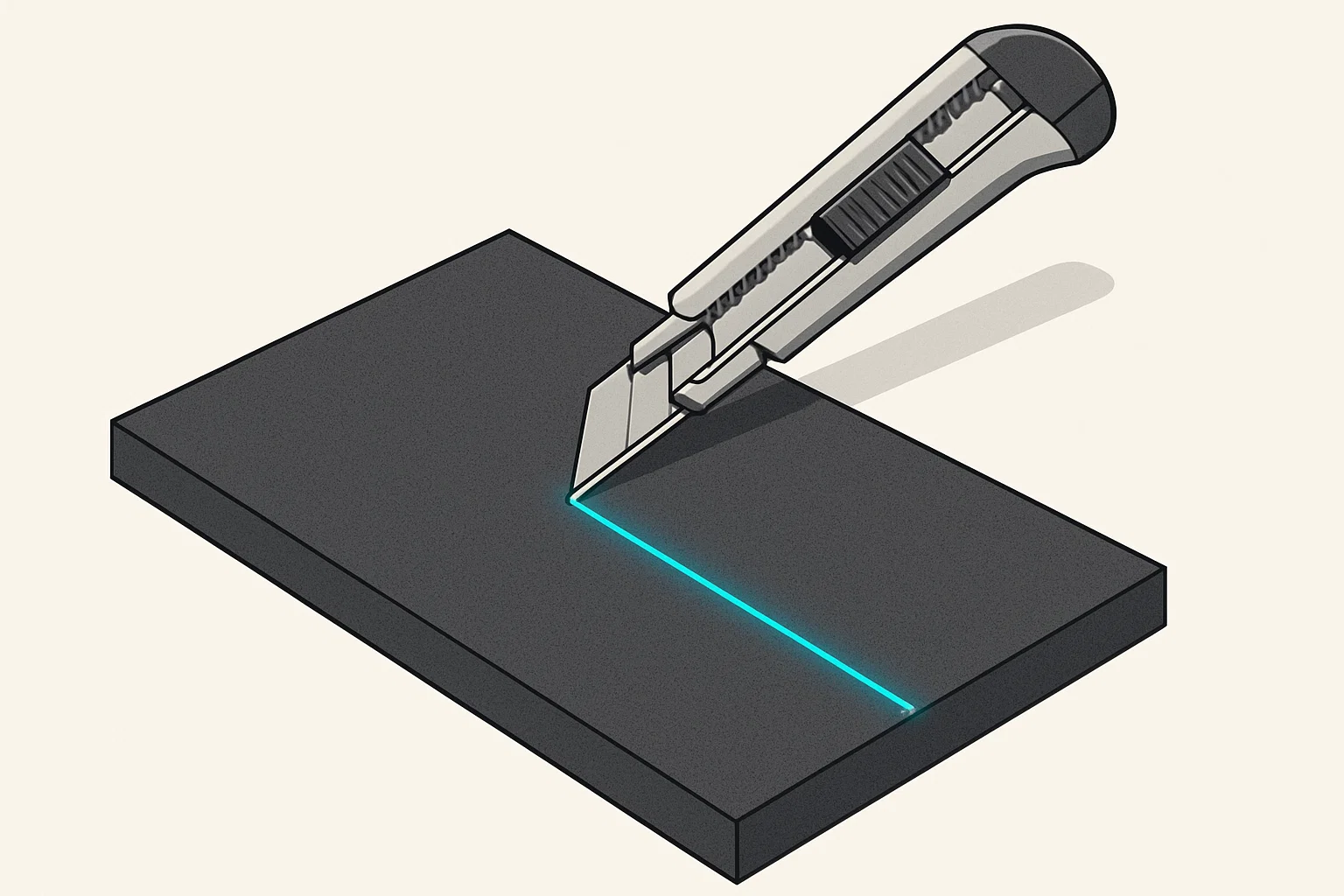
The selected density heavily affects how well EVA foam can be cut, routed, laminated, or assembled.
- Die cutting: Density influences edge recovery and dimensional stability after the blade presses through.
- CNC routing: Higher density produces cleaner pocket walls and much better detail, whereas low-density foam might tear or leave fuzzy edges.
- Lamination: Density should support the added layer without unwanted warping.
- Adhesive backing: Firmer foam provides more stable handling during assembly.
If the part includes complex pockets, narrow walls, or tight fit requirements, review our custom cut EVA foam guide before finalizing the specification.
10 Shore C vs 40 Shore C Foam Sheets
Buyers searching for a 10 Shore C foam rubber sheet usually want a soft, compressible pad. On our chart that sits in the ultra-low to low-medium band: about 33–80 kg/m³, Shore 00 into the low Shore C range. It cushions well and bottoms out under a sustained load.
A 40 Shore C foam sheet is the default industrial insert: about 80–150 kg/m³, 25–55 Shore C depending on formulation. It holds die-cut edges, takes adhesive backing, and still has some give. If the part is a tool tray, gasket, or wheel, move past 40 Shore C into Shore A.
Density and Shore C are not the same number. Two 40 Shore C sheets can have different kg/m³; the heavier one lasts longer under compression. Ask for both values on the data sheet.
If you are comparing 10 to 40 Shore C foam rubber sheets for an RFQ, that range covers everything from soft packaging pads to firm case liners. Match your pick to the chart above, then confirm the density in kg/m³ on the supplier’s data sheet before ordering. For standard and cut-to-size stock, browse our custom EVA foam sheet manufacturing options.
How to Specify EVA Foam Density in an RFQ
A strong RFQ should include:
- Product Details: Weight, size, and photos.
- Dimensions: Required foam thickness and finished part dimensions.
- Application: Packaging, gasket, pad, tool insert, or structural component.
- Desired feel: Soft cushioning, balanced support, or firm structure.
- Fabrication method: Die cutting, CNC routing, etc.
You can also use our custom EVA foam requirements guide to organize the technical details before requesting a quote.
Frequently Asked Questions
What is a 10 Shore C foam sheet?
A 10 Shore C foam sheet is a soft EVA (or similar closed-cell) sheet. It compresses easily, so it works for light padding and cheap inserts. It is a poor choice for a part that stays loaded for months.
What is a 40 Shore C foam sheet?
A 40 Shore C foam sheet is a mid-firm EVA sheet used for packaging inserts, case liners, and many footwear / orthotic parts. It is the grade most B2B RFQs mean when they say “standard EVA sheet.”
Is Shore C the same as EVA foam density?
No. Shore C is surface hardness. Density is mass per volume (kg/m³ or PCF). Spec both, plus thickness and compression set.
What is the density of EVA foam?
EVA foam density typically ranges from 33 to 280 kg/m³ (2.0–17.5 PCF). Light padding uses 33–60 kg/m³, standard packaging inserts run 80–150 kg/m³, and gaskets or structural parts need 150–280 kg/m³. Always confirm both density and hardness on the data sheet — they are independent values.
What Shore C range covers standard foam rubber sheets?
Most B2B foam rubber sheets fall between 10 and 40 Shore C. The 10 Shore C end is soft cushioning; 40 Shore C is the mid-firm default for packaging inserts and case liners. Above 40 Shore C, buyers usually switch to the Shore A scale for gaskets and load-bearing parts.
Summary
The best EVA foam density is the one that mathematically and practically balances cushioning, support, fabrication quality, and cost for the final application. Low-density EVA foam is suitable for light products and simple liners, medium-density works perfectly for general packaging inserts, and high-density foam is critical for tool inserts, gaskets, and heavy-duty parts.
Damao Tech supplies custom EVA foam materials and fabricated parts for B2B projects. Send your product details, drawing, or reference sample to start a density and manufacturability review.