EVA Foam Engineering: Technical Considerations for Product Designers

EVA Foam Engineering: Technical Considerations for Product Designers

For product designers and industrial engineers, selecting the correct foam material requires an analysis of mechanical properties, environmental resistance, and secondary processing capabilities. Ethylene-Vinyl Acetate (EVA) foam is frequently selected for high-performance applications where traditional polyethylene (PE) or polyurethane (PU) foams fail to meet specific durability or elasticity requirements. This guide explores the critical technical parameters designers must consider when specifying EVA foam for their projects.

1. Defining Mechanical Specifications: Hardness and Density

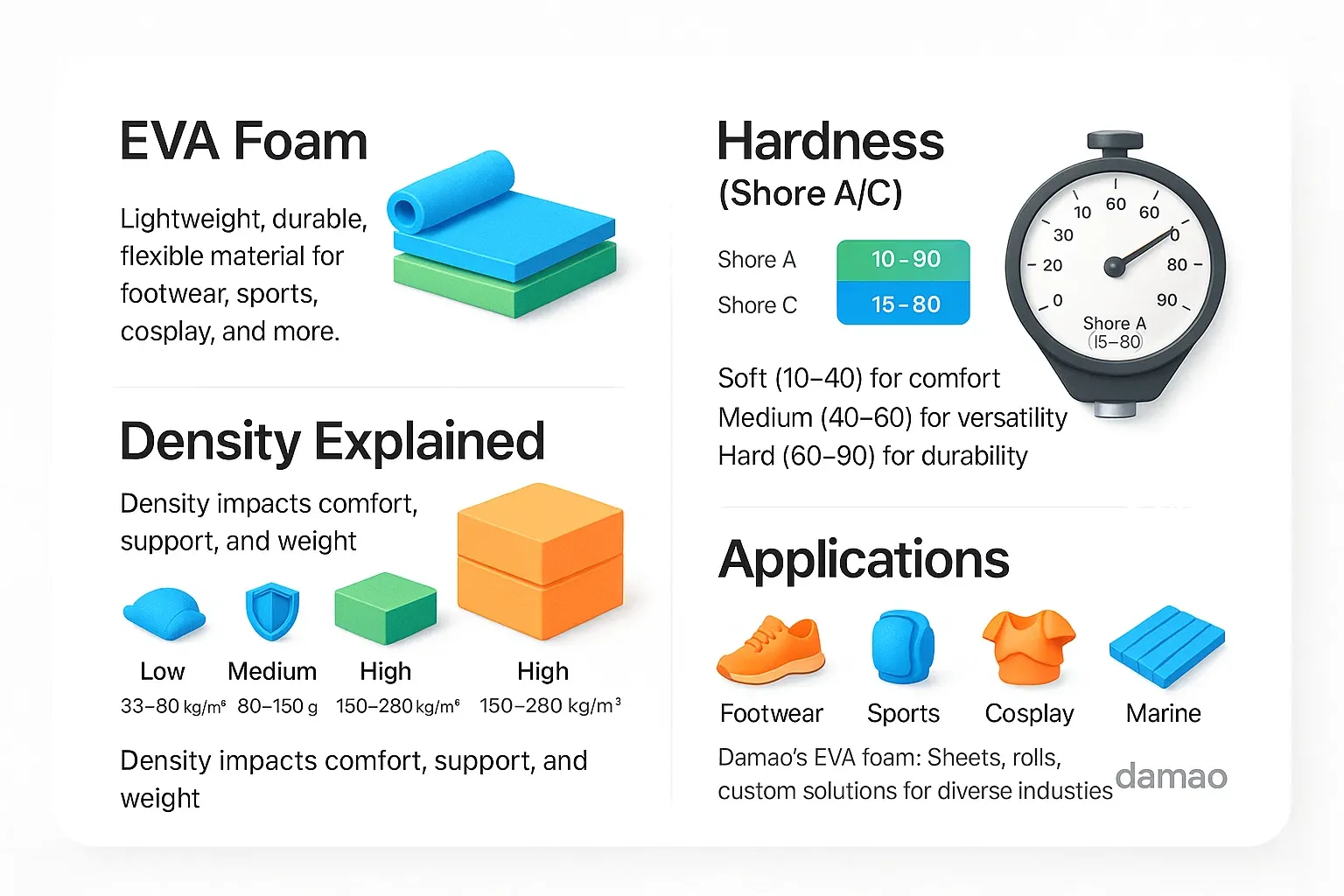
The two primary variables in EVA foam specification are hardness and density. Unlike open-cell foams that are categorized by IFD (Indentation Force Deflection), EVA is measured via the Shore scale and mass per unit volume.

  • Shore Hardness (Shore C/A): Most industrial EVA is measured on the Shore C scale. Hardness typically ranges from 35° Shore C (Soft) for cushioning to 75° Shore C (Hard) for structural components or boat decking.
  • Density (kg/mÂł): Density directly impacts the material’s weight and compressive strength. Common industrial densities range from 45 kg/mÂł for protective packaging to 110+ kg/mÂł for high-traffic flooring or shoe outsoles.

Design Tip: Hardness and density are often linked, but custom formulations can decouple them to create “High-Hardness, Low-Density” materials for weight-sensitive applications like aerospace or high-performance athletics.

2. Tensile Strength and Elongation at Break

EVA foam is an elastomer, meaning it can undergo significant deformation and return to its original shape. Designers should evaluate:

  • Tensile Strength: Measures the force required to pull the material until it breaks. High-VA EVA foams typically exhibit higher tensile strength than standard PE foams.
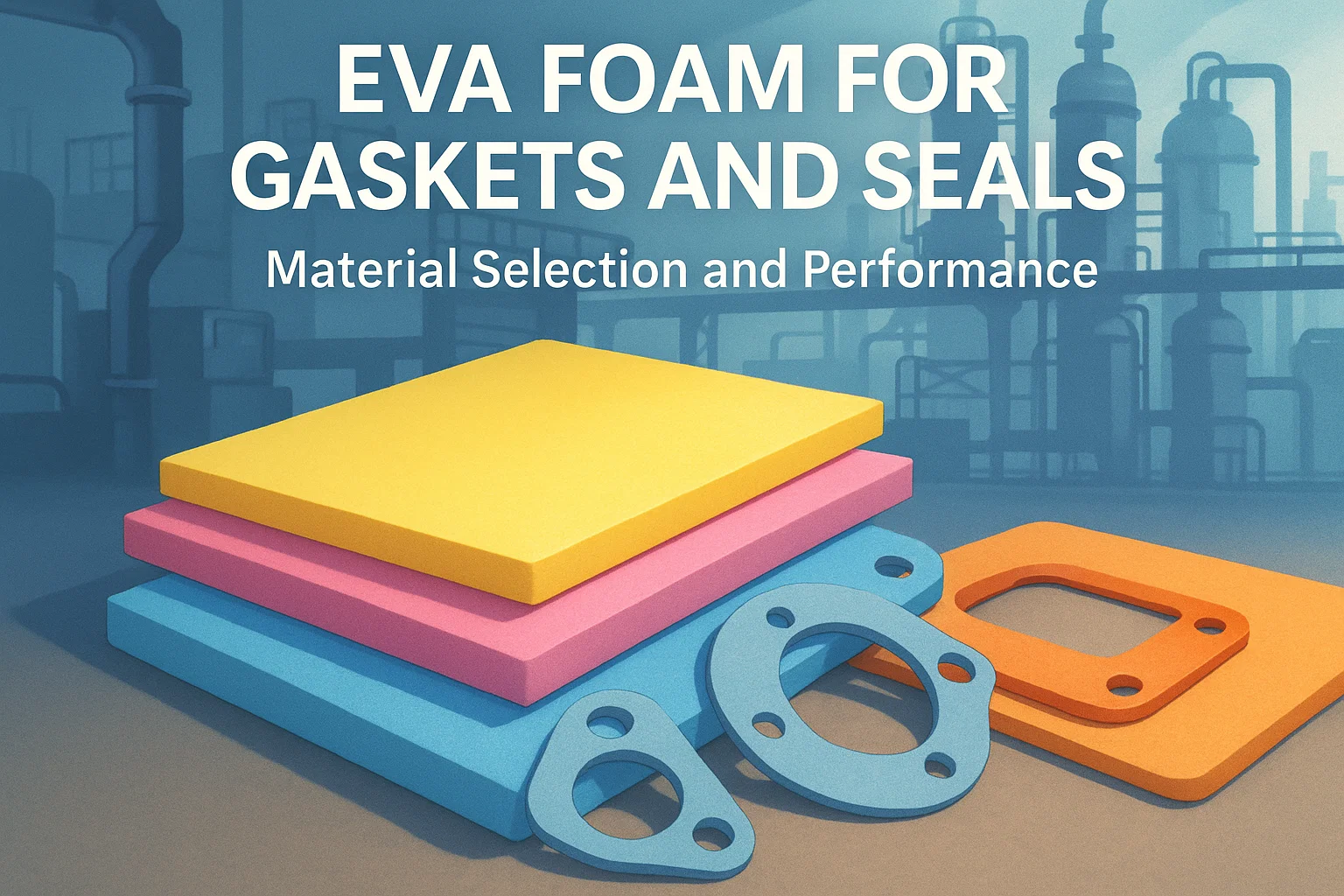
  • Elongation at Break: Expressed as a percentage, this indicates how much the foam can stretch before failure. Industrial-grade EVA can often achieve elongation rates exceeding 150-200%, making it ideal for gaskets and flexible joints.

3. Secondary Processing: Thermoforming and Skiving

One of the greatest advantages of EVA for product design is its thermoplastic nature, which allows for advanced secondary fabrication:

Precision Thermoforming

EVA foam can be heated to its softening point and vacuum-formed into complex 3D shapes. This allows designers to create contoured parts, such as ergonomic handles, protective helmets, and custom medical supports, with high repeatable accuracy.

Skiving and Lamination

The material can be skived (sliced) into ultra-thin sheets (down to 1mm) with minimal thickness variance. Furthermore, EVA’s chemical structure allows for excellent bonding with adhesives, films, and textiles, enabling the creation of high-performance composite materials.

4. Environmental and Chemical Resistance

Product lifespan is determined by how the material reacts to its environment. EVA foam provides:

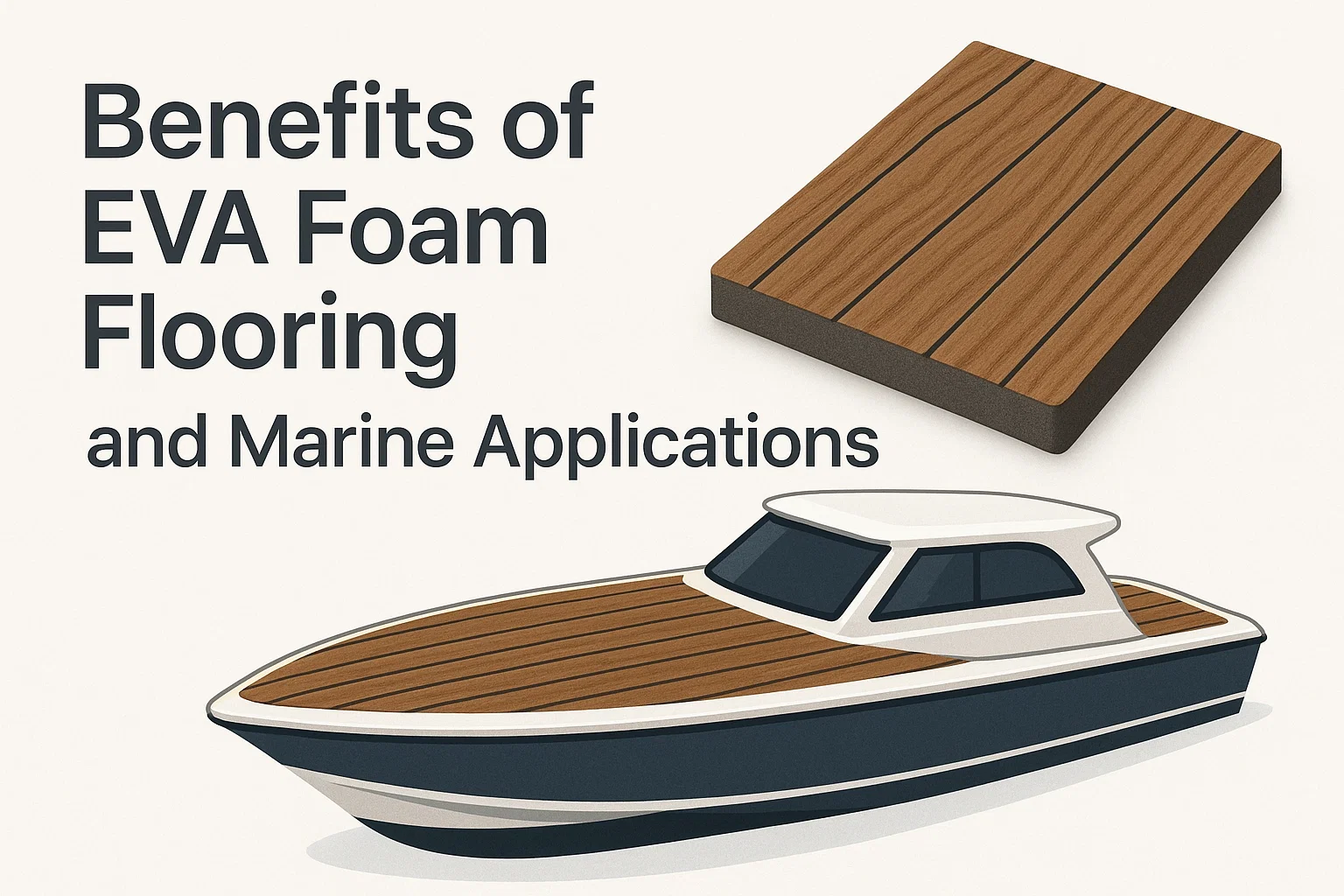
  • UV Stability: Can be formulated with UV inhibitors for outdoor use (essential for marine and construction applications).
  • Chemical Inertness: Resists degradation from many oils, detergents, and industrial solvents.
  • Thermal Range: Operates effectively from -70°C to 80°C. For applications exceeding 80°C, cross-linked EVA should be specified to prevent thermal deformation.

5. Compression Set and Resilience

In applications like footwear or orthopedic support, the “compression set” (the material’s inability to return to its original thickness after long-term load) is critical. High-quality cross-linked EVA foam exhibits a low compression set, ensuring that the cushioning effect remains consistent over thousands of cycles.

Summary for Designers

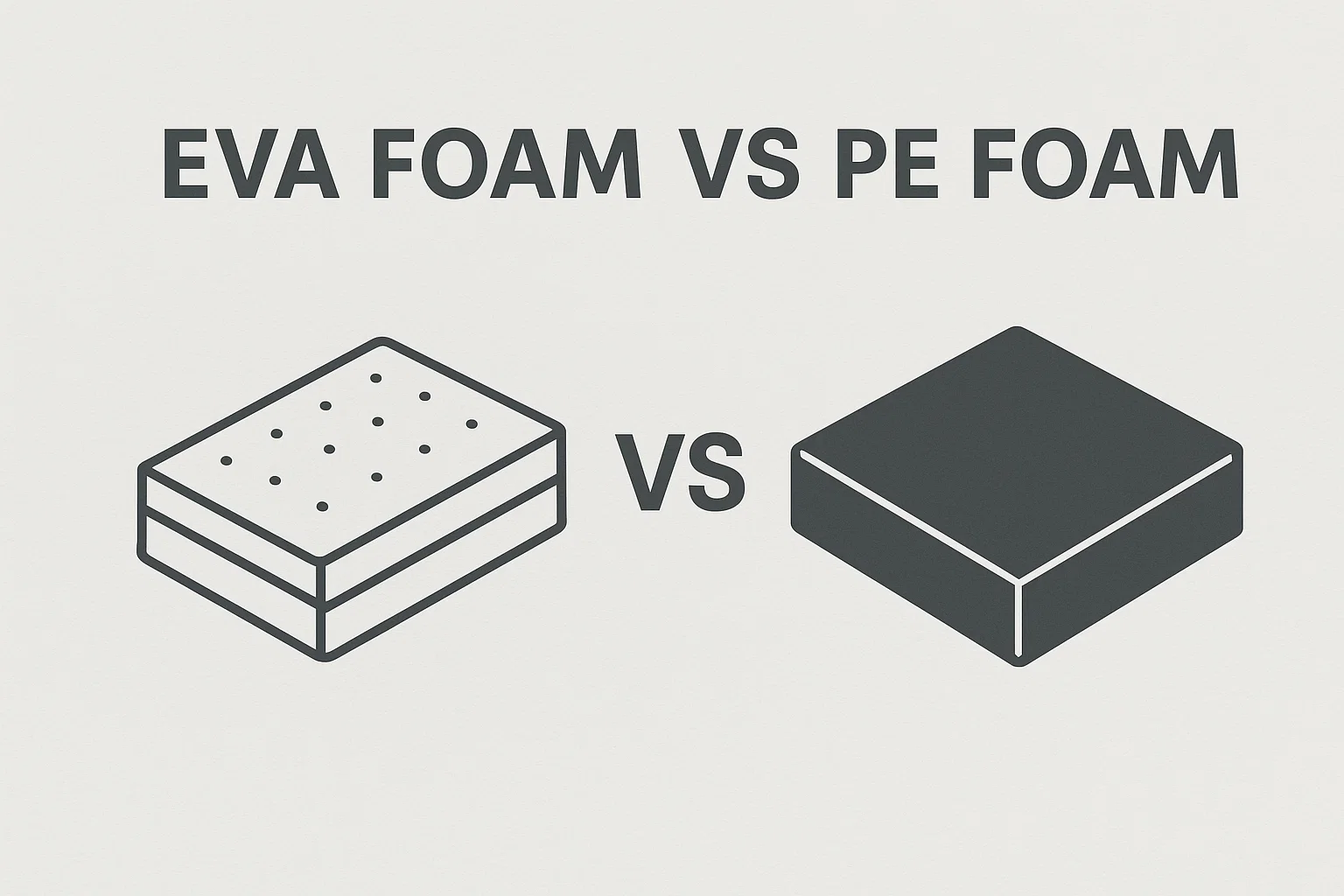
Specifying EVA foam allows for a high degree of material tuning. By providing your supplier with targeted Shore hardness, density, and tensile requirements, you can ensure the foam performs flawlessly in its intended environment. Explore the key differences between EVA and PE foam to help refine your material selection process.

Tags :
Share :

Similar Posts

EVA Foam for Marine Applications: Durability and Safety Standards

EVA Foam for Marine Applications: Durability and Safety Standards

The marine environment presents some of the most challenging conditions for industrial materials, requiring resistance to high UV exposure, constant saltwater saturation, and intense mechanical wear.

Read More
Specifying Marine EVA Foam: A Procurement Guide for Boat Owners and Manufacturers

Specifying Marine EVA Foam: A Procurement Guide for Boat Owners and Manufacturers

Selecting the right marine decking material involves more than just choosing a color. For boat manufacturers and commercial vessel operators, the foam must meet rigorous performance standards to ensur

Read More
Comparing TPU with Plastics in Automotive, Footwear, Medical

Comparing TPU with Plastics in Automotive, Footwear, Medical

Thermoplastic polyurethane (TPU) stands out among other commonly used plastics due to its unique combination of properties. In this article, we will compare TPU with other plastics commonly used in th
Read More
Custom Cut EVA Foam: Cutting Methods, Tolerances, and Applications

Custom Cut EVA Foam: Cutting Methods, Tolerances, and Applications

Custom cut EVA foam is used when standard sheet stock needs to become a finished part: a packaging insert, gasket, pad, spacer, protective liner, case interior, or adhesive-backed component. The r
Read More
Custom EVA Foam Fabrication Services: The Complete Guide

Custom EVA Foam Fabrication Services: The Complete Guide

Our custom EVA foam fabrication services transform technical material data into application-specific components for industrial and consumer markets. By utilizing advanced manufacturing technologie

Read More
Custom EVA Foam Inserts Guide: Design and Tool Box Organization

Custom EVA Foam Inserts Guide: Design and Tool Box Organization

Custom EVA foam inserts are precision CNC-routed closed-cell foam layers that lock specific tools, devices, or products into shaped pockets inside a transport case. They prevent impact damage duri

Read More
Dicumyl Peroxide (DCP) in EVA Foam: Crosslinking & Curing

Dicumyl Peroxide (DCP) in EVA Foam: Crosslinking & Curing

This technical guide to Dicumyl Peroxide (DCP) in EVA foam analyzes the chemical crosslinking process that defines the material's final physical properties. Precisely managing the DCP concentratio

Read More
What are the Disadvantages of EVA Foam? An Honest Buyer’s Guide

What are the Disadvantages of EVA Foam? An Honest Buyer’s Guide

Ethylene-Vinyl Acetate (EVA) is widely celebrated for its lightweight cushioning and versatility. However, as an industry-leading manufacturer, Damao Tech believes that informed decisions requ

Read More
Disposable Glove Management Guide: Safety & Cost Savings

Disposable Glove Management Guide: Safety & Cost Savings

This disposable glove management guide provides a framework to balance worker safety with operational efficiency. Managing glove supplies effectively prevents costly stockouts and ensures your tea

Read More
Equine Balance Pads in EVA Foam for Horse Rehab and Stability

Equine Balance Pads in EVA Foam for Horse Rehab and Stability

Equine balance pads are widely used in horse rehabilitation, stability training, and conditioning because they create a controlled unstable surface that encourages small postural adjustments. When the

Read More
EVA foam sheets and fabrication factors for custom foam pricing

EVA Foam Cost Guide: What Affects Custom EVA Foam Pricing?

EVA foam cost depends on more than sheet size. For custom projects, the final price is shaped by material density, thickness, formulation, color, fabrication method, tooling, lamination, packaging

Read More
EVA Foam Density Explained: The Ultimate Guide for Custom Parts

EVA Foam Density Explained: The Ultimate Guide for Custom Parts

EVA foam density is measured in kilograms per cubic meter (kg/m³) and typically ranges from 33 to 280 kg/m³. Low-density EVA (33–60 kg/m³) is soft and compressible for yoga mats and lightweight pa

Read More
EVA Foam Density & Hardness: Shore A, C, and 00 Guide

EVA Foam Density & Hardness: Shore A, C, and 00 Guide

This technical guide to EVA foam density and hardness provides the framework needed for precise material selection. Understanding the mechanical differences between these two properties prevents p

Read More
EVA Foam for Gaskets and Seals: Selection & Performance

EVA Foam for Gaskets and Seals: Selection & Performance

This guide to EVA foam for gaskets and seals analyzes the physical properties that drive industrial sealing performance. Selecting the correct foam gra

Read More
EVA Foam Manufacturer Guide: How to Choose a Custom Foam Factory

EVA Foam Manufacturer Guide: How to Choose a Custom Foam Factory

Choosing the right EVA foam manufacturer matters when your project requires more than standard sheet stock. Industrial buyers often need a supplier who can control density, hardness, thickness, co

Read More
EVA Foam Manufacturing Process: From Polymer Resin to Finished Sheets

EVA Foam Manufacturing Process: From Polymer Resin to Finished Sheets

The production of high-performance Ethylene-Vinyl Acetate (EVA) foam is a multi-stage chemical and mechanical process that requires precise control over temperature, pressure, and timing. By adjusting

Read More
EVA Foam Packaging Inserts for Electronics, Tools, and Medical Devices

EVA Foam Packaging Inserts for Electronics, Tools, and Medical Devices

EVA foam packaging inserts protect products by holding each item in a stable, custom-fit cavity. Compared with loose void fill or generic foam blocks, a properly designed EVA insert controls movem

Read More
EVA Foam Pricing Guide: Factors Driving Industrial Manufacturing Costs

EVA Foam Pricing Guide: Factors Driving Industrial Manufacturing Costs

For procurement managers and product designers, understanding the pricing structure of Ethylene-Vinyl Acetate (EVA) foam is essential for accurate project budgeting. While the base material may appear

Read More
EVA Foam for Protective Packaging: Benefits & Custom Solutions

EVA Foam for Protective Packaging: Benefits & Custom Solutions

This guide to EVA foam for protective packaging analyzes why this material is the industry standard for safeguarding high-value items. Using the right

Read More
EVA Foam Rebound Resilience: ASTM D3574 Test H Guide and Data Chart

EVA Foam Rebound Resilience: ASTM D3574 Test H Guide and Data Chart

**EVA foam rebound resilience (or "rebound ratio") is the percentage of impact energy a foam returns after being struck, measured by dropping a 16 mm / 16.3 g steel ball from a 500 mm height onto the

Read More
EVA Foam Sheets Technical Guide: Understanding Density, Hardness, and Quality

EVA Foam Sheets Technical Guide: Understanding Density, Hardness, and Quality

Whether you are an engineer designing shock-absorbing industrial pads, a footwear manufacturer looking for the perfect midsole, or a creative professional building intricate props, the success of your

Read More
EVA Foam Supplier Guide: What Buyers Should Check Before Ordering

EVA Foam Supplier Guide: What Buyers Should Check Before Ordering

Finding an EVA foam supplier is easy. Finding one who can support a custom B2B project with stable material, correct fabrication, and reliable documentation is harder. The right supplier should he

Read More
Industrial and Commercial Applications of EVA Foam: A Technical Overview

Industrial and Commercial Applications of EVA Foam: A Technical Overview

Ethylene-Vinyl Acetate (EVA) foam's versatility is a result of its unique molecular structure, which combines the flexibility of rubber with the processability of thermoplastics. Because it is a close

Read More
EVA vs PE Foam: A Complete Comparison Guide

EVA vs PE Foam: A Complete Comparison Guide

Selecting the wrong closed-cell foam causes immediate performance drop-offs and blown material budgets. This comprehensive guide compares EVA vs PE foam, highlighting their distinct physical stren

Read More
How to Cut EVA Foam Cleanly and Precisely

How to Cut EVA Foam Cleanly and Precisely

To cut EVA foam cleanly, use a sharp snap-off utility knife for sheets under 10 mm, a hot knife for smooth sealed edges on curves, or a bandsaw for foam thicker than 20 mm. The key technique is th

Read More
How to Glue EVA Foam: Complete Adhesive Guide

How to Glue EVA Foam: Complete Adhesive Guide

Attempting to bond closed-cell polymers with standard household glues causes immediate seam failure. This guide explains perfectly how to glue EVA foam by identifying the exact chemical adhesives and

Read More
How to Make Foam Armor: The Ultimate Guide Using Professional EVA Foam

How to Make Foam Armor: The Ultimate Guide Using Professional EVA Foam

Creating movie-quality armor is a blend of artistry and material science. The secret held by professional prop makers isn't just skill—it's the choice of material. High-density EVA Foam has revolu

Read More
How to Specify Custom EVA Foam: A Technical Guide

How to Specify Custom EVA Foam: A Technical Guide

This guide on how to specify custom EVA foam requirements helps procurement managers provide the technical data needed for accurate manufacturing. Effectively communicating your material needs pre

Read More
Product Update: Introducing Our New Foldable Yoga Mats, Smart Jump Ropes & Foam Rollers

Product Update: Introducing Our New Foldable Yoga Mats, Smart Jump Ropes & Foam Rollers

Introduction We are excited to announce a major update to our best-selling fitness lineup. At Damao Tech, we understand that fitness gear is more than just equipment—it is a lifestyle statement.

Read More
Private Label Manufacturing for Equestrian Brands: Build a Custom Stability Pad Line

Private Label Manufacturing for Equestrian Brands: Build a Custom Stability Pad Line

If you want to grow your equestrian brand without building a factory, private label manufacturing gives you a practical way to launch a custom stability pad line with less risk. The right factory

Read More
Reaching Further for Safety & Hygiene: Your Essential Guide to Disposable Veterinary Long Arm Exam Gloves

Reaching Further for Safety & Hygiene: Your Essential Guide to Disposable Veterinary Long Arm Exam Gloves

Hey there, fellow animal care pros! đź‘‹ Whether you're a seasoned veterinarian, a dedicated vet tech, a student learning the ropes, or even a farmer managing livestock health, you understand that veter

Read More
Safe EVA Foam for Children's Toys & Play Mats: Standards, Durability & Design Tips

Safe EVA Foam for Children's Toys & Play Mats: Standards, Durability & Design Tips

Ethylene-Vinyl Acetate (EVA) foam is a highly flexible, shock-absorbing copolymer widely used in nurseries, schools, and playrooms. Parents and manufacturers prioritize this material because it provid

Read More
Shoulder Length Plactic Gloves with Elastic Band Cuff

Shoulder Length Plactic Gloves with Elastic Band Cuff

Introduction: Shoulder length plastic gloves have become increasingly popular in a variety of industries and professions, such as veterinary medicine, food service, and industrial settings. These

Read More
Specifying EVA Foam Sheets & Rolls

Specifying EVA Foam Sheets & Rolls

Unlock the Potential: Specifying Your Ideal EVA Foam Ethylene-Vinyl Acetate (EVA) foam is a remarkably versatile material, prized for its soft, flexible, yet durable nature.

Read More
Sustainable Custom EVA Foam for Yoga Props: Eco-Friendly Options for High-End Brands

Sustainable Custom EVA Foam for Yoga Props: Eco-Friendly Options for High-End Brands

High-end yoga brands face a persistent challenge: balancing product performance with environmental responsibility. Advanced manufacturing techniques now allow brands to produce sustainable EVA yoga pr

Read More
7 Key Advantages of EVA Foam for Industrial Manufacturing

7 Key Advantages of EVA Foam for Industrial Manufacturing

Ethylene-Vinyl Acetate (EVA) foam has established itself as a critical material in the global manufacturing supply chain. Its unique combination of elastomeric properties and thermoplastic processabil

Read More
Veterinary shoulder length Gloves

Veterinary shoulder length Gloves

Introduction Shoulder length plastic gloves, a staple in various industries such as veterinary medicine, food service, and industrial settings, have seen a surge in popularity. These gloves are de

Read More
Water Resistance and Buoyancy of EVA Foam: Properties and Applications

Water Resistance and Buoyancy of EVA Foam: Properties and Applications

EVA foam, or Ethylene-Vinyl Acetate foam, is a versatile, lightweight, and durable material widely used across industries for its exceptional water resistance and buoyancy. Whether you're a manufactur

Read More
What are the differences between EVA and TPE materials?

What are the differences between EVA and TPE materials?

Choosing the right material can make or break your product's performance, durability, and market appeal. In the world of polymers, EVA (Ethylene Vinyl Acetate) and *TPE (Thermoplastic Elastomer)

Read More
What is EVA Foam? Properties, Manufacturing, and Industrial Applications

What is EVA Foam? Properties, Manufacturing, and Industrial Applications

Ethylene-Vinyl Acetate (EVA) foam is a closed-cell elastomeric polymer known for its exceptional stress-crack resistance, low-temperature toughness, and waterproof properties. As a copolymer of ethyle

Read More
What is a Disposable Plastic Gloves Machine?

What is a Disposable Plastic Gloves Machine?

In sectors where hygiene and safety are paramount, such as healthcare, food service, and cleanroom environments, disposable gloves are an indispensable part of daily operations. But have you ever paus

Read More
What is EVA Foam? Complete Technical Materials Guide

What is EVA Foam? Complete Technical Materials Guide

Industrial manufacturers frequently struggle to source structural materials that combine heavy shock absorption with absolute waterproofing. This guide explains what EVA foam is, breaking down its

Read More
What is EVA Foam Padding? Material Definition and Guide

What is EVA Foam Padding? Material Definition and Guide

EVA stands for Ethylene-Vinyl Acetate — a closed-cell copolymer of ethylene gas and vinyl acetate (VA). EVA foam padding is the foamed form of this polymer, prized for its lightweight cushioning,

Read More
Yoga Roller

Yoga Roller

[vc_row][vc_column width="1/1"][vc_column_text]A yoga roller, also known as a foam roller, is a cylindrical tool made from high-density foam used for self-massage, muscle recovery and improv

Read More
Are PVC Gloves Recyclable? A Technical Perspective on Vinyl Disposal

Are PVC Gloves Recyclable? A Technical Perspective on Vinyl Disposal

As global industries shift toward sustainable operations, the environmental impact of disposable personal protective equipment (PPE) has come under intense scrutiny. Polyvinyl Chloride (PVC) gloves, c

Read More
Veterinarian Gloves: A Guide to Material Selection and Protective Standards

Veterinarian Gloves: A Guide to Material Selection and Protective Standards

In veterinary medicine, disposable gloves are the primary defense against zoonotic diseases and cross-contamination. Selecting the correct glove requires balancing tactile sensitivity for clinical exa

Read More
PLA Biodegradable Lunch Boxes: A Sustainable Solution for Modern Food Service

PLA Biodegradable Lunch Boxes: A Sustainable Solution for Modern Food Service

Polylactic Acid (PLA) is a biopolymer that has revolutionized the sustainable packaging industry. Derived from fermented plant starch (typically corn or sugarcane), PLA offers a transparent, sturdy, a

Read More