What is EVA Foam Padding? Material Definition and Guide
What is EVA Foam Padding? Material Definition and Guide
Manufacturers struggle to find lightweight padding that blocks heavy kinetic impacts without absorbing water. This guide explains exactly what EVA foam padding is, defining its chemical structure and outlining why this specific polymer dominates the protective equipment and custom packaging industries.
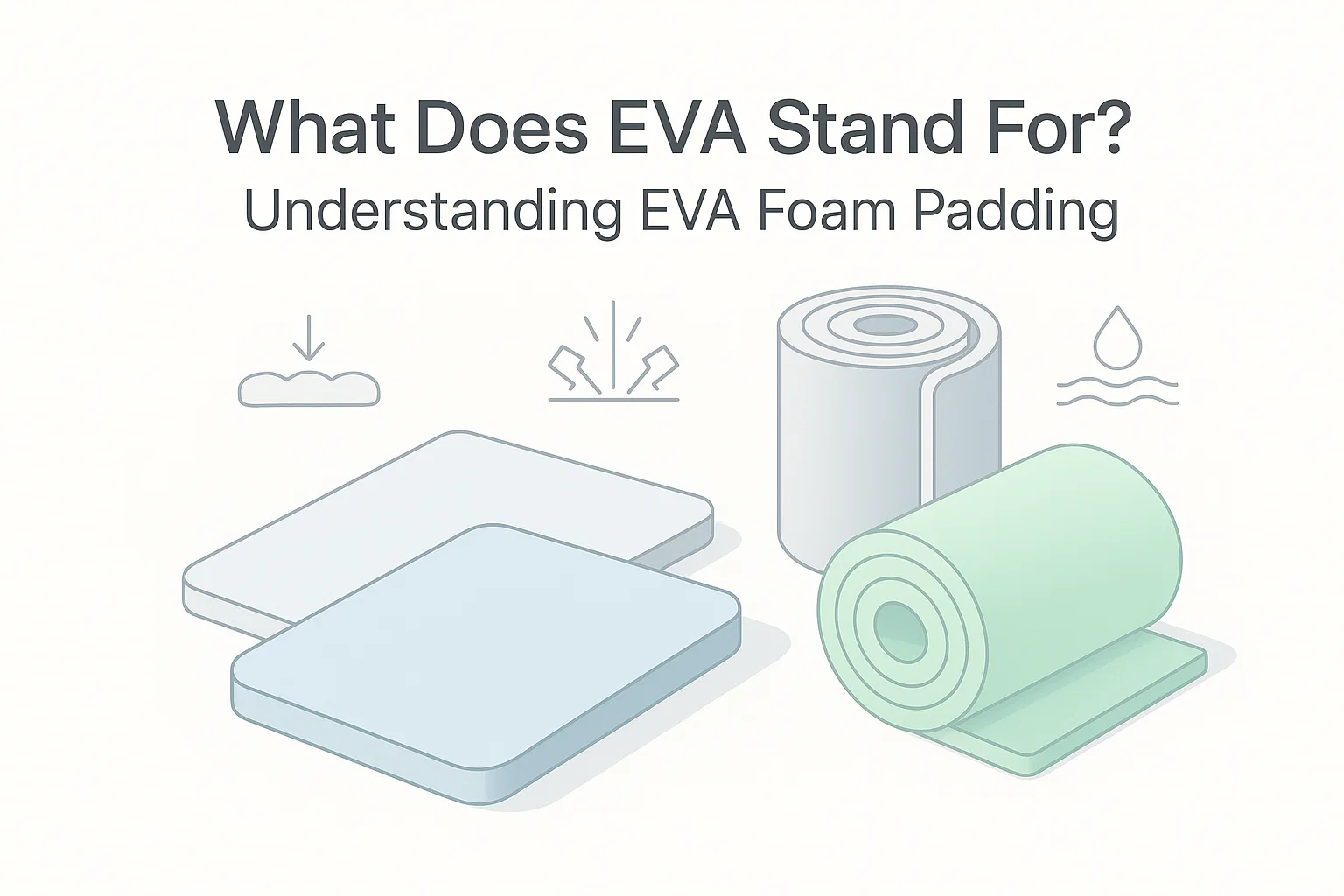
What Does EVA Stand For?
EVA stands for Ethylene-Vinyl Acetate. It is a closed-cell elastomeric polymer manufactured by copolymerizing ethylene gas with liquid vinyl acetate. This specific chemical combination results in a highly flexible, rubber-like foam that actively resists severe physical crushing. Because the internal cell structure remains completely sealed, EVA foam naturally blocks liquid moisture absorption and resists chemical degradation.
Core Physical Characteristics
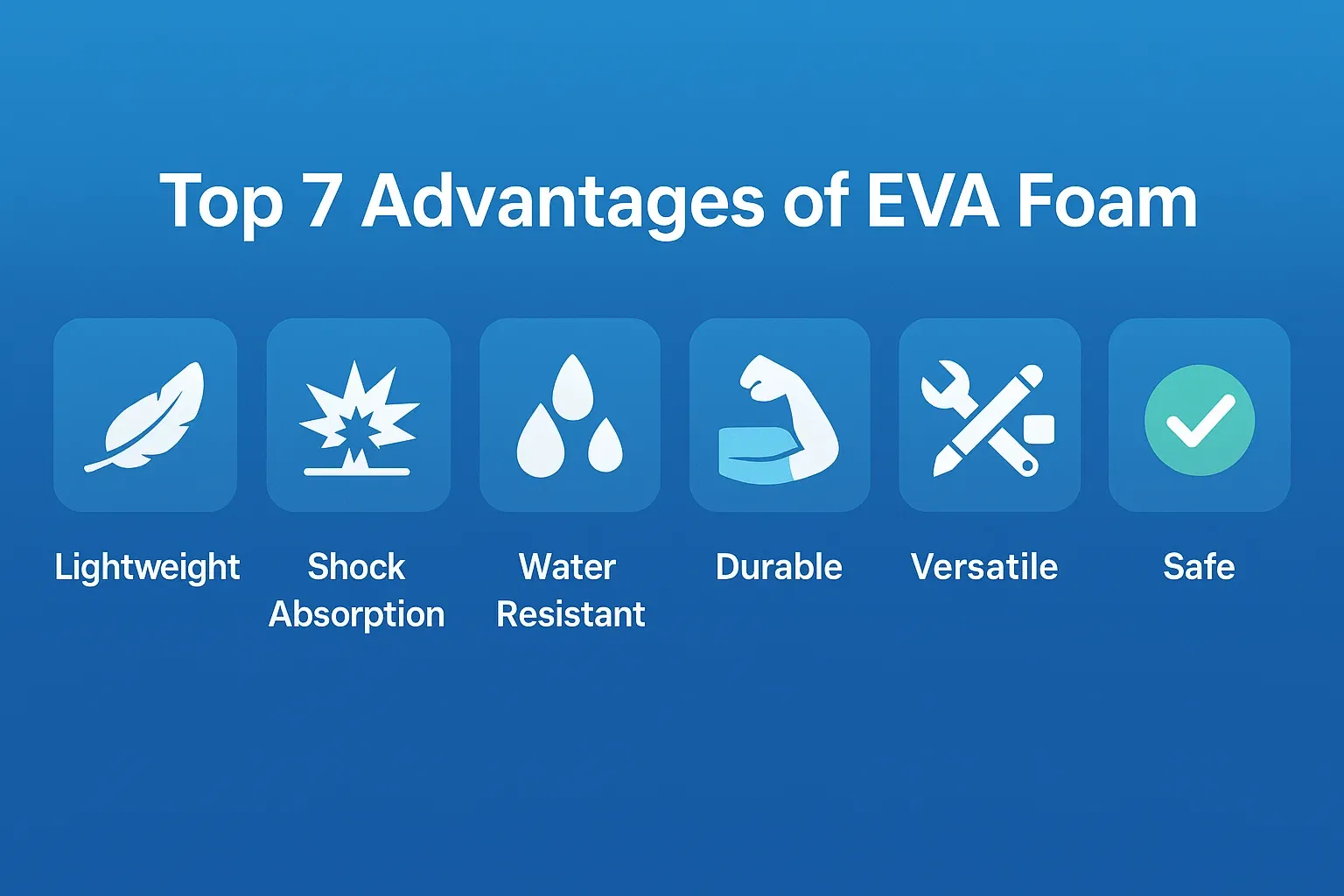
Unlike fragile open-cell polyurethane, EVA foam padding delivers guaranteed structural stability. Our material testing highlights several distinct physical advantages:
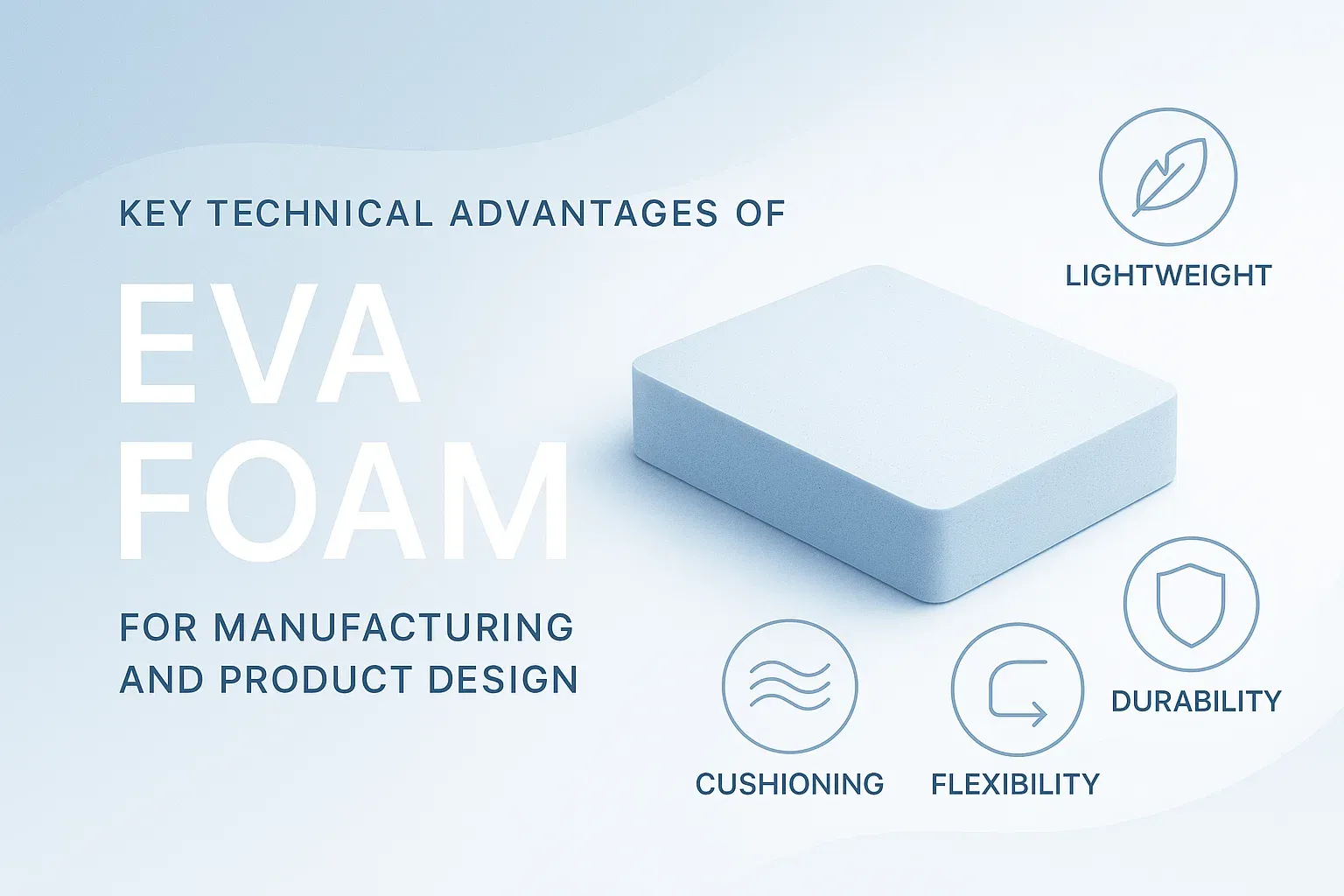
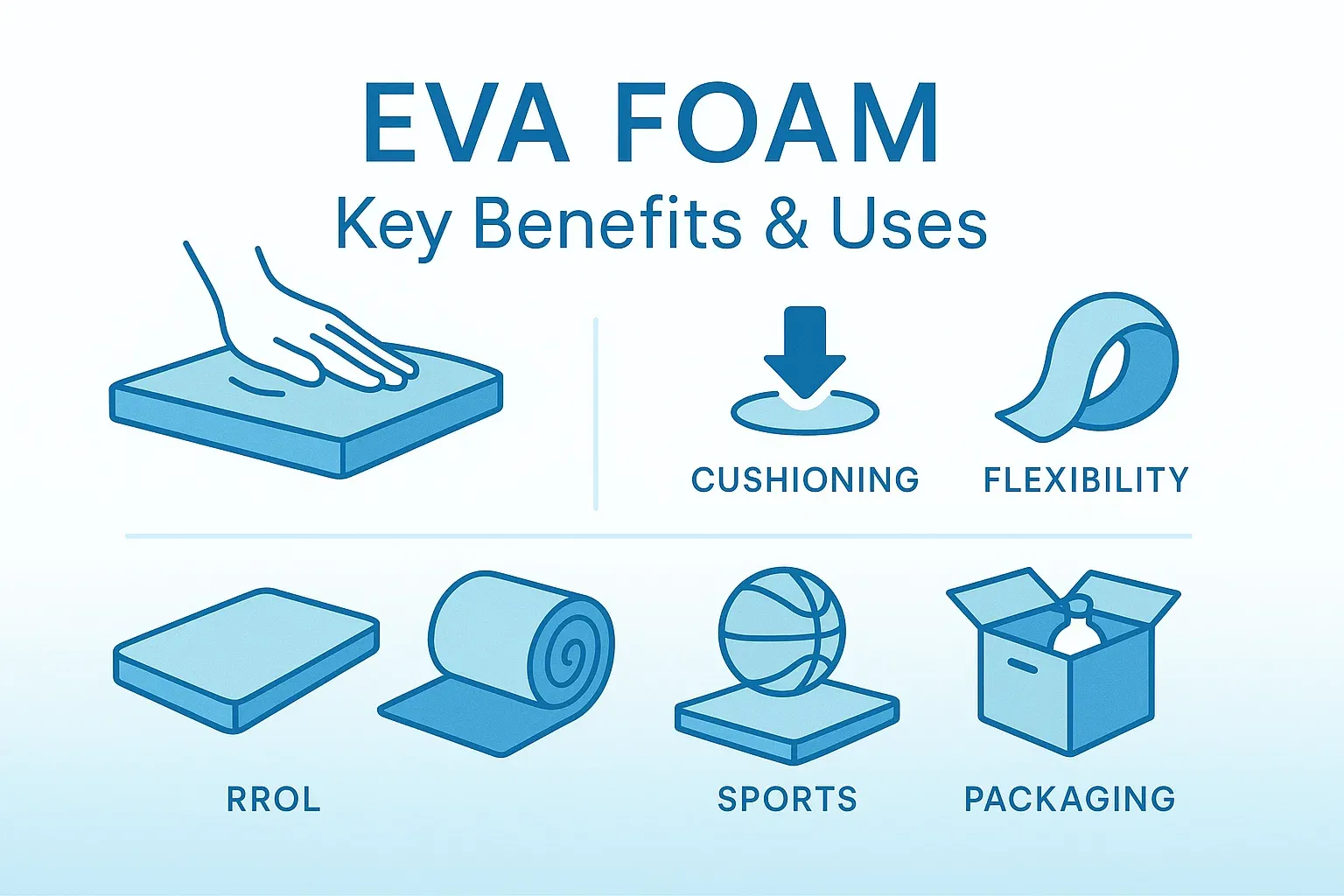
- High-Density Cushioning: Absorbs sudden, heavy physical shocks while returning completely to its original geometric shape.
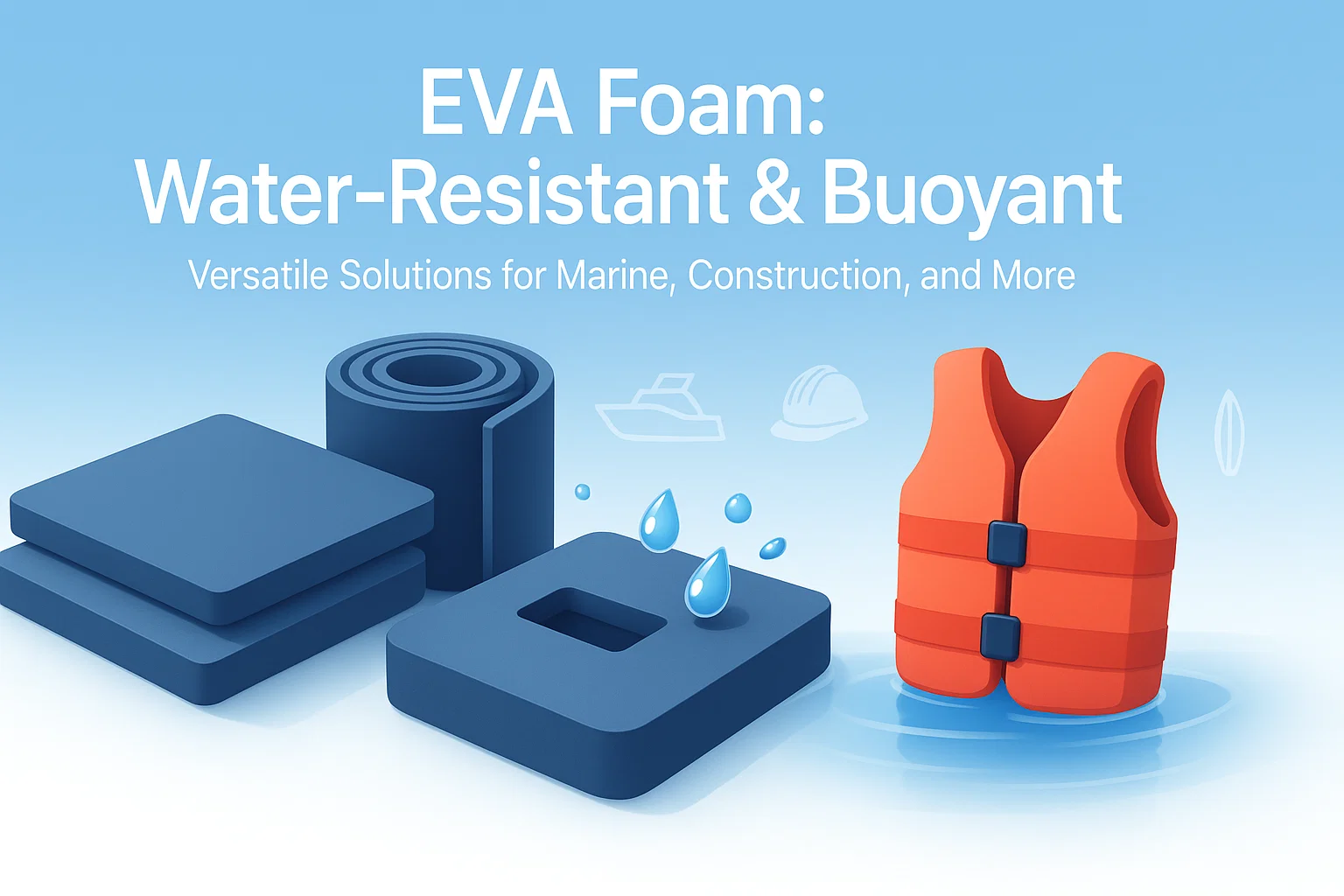
- Absolute Water Resistance: Maintains a 100% waterproof surface due to its closed-cell microscopic walls.
- Extreme Weather Durability: Resists harmful UV radiation breakdown safely, making it perfect for prolonged outdoor marine applications.
- Chemical Stability: Remains completely non-toxic and odorless upon final thermal curing.
How Industries Use EVA Foam Padding
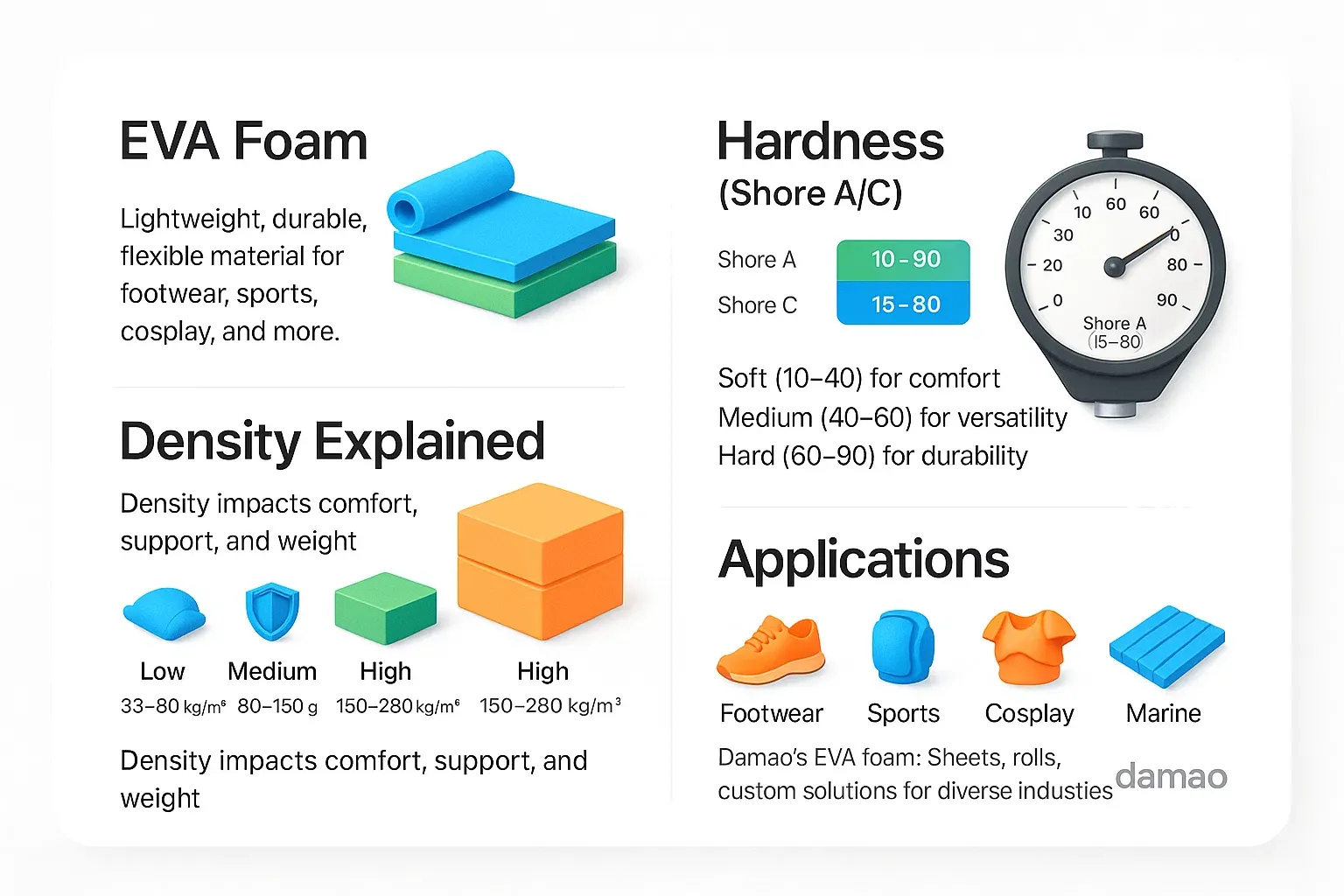
Because engineers can manufacture EVA foam across massively different density grades (ranging from 33 kg/m³ to 280 kg/m³), the material serves diverse industrial functions:
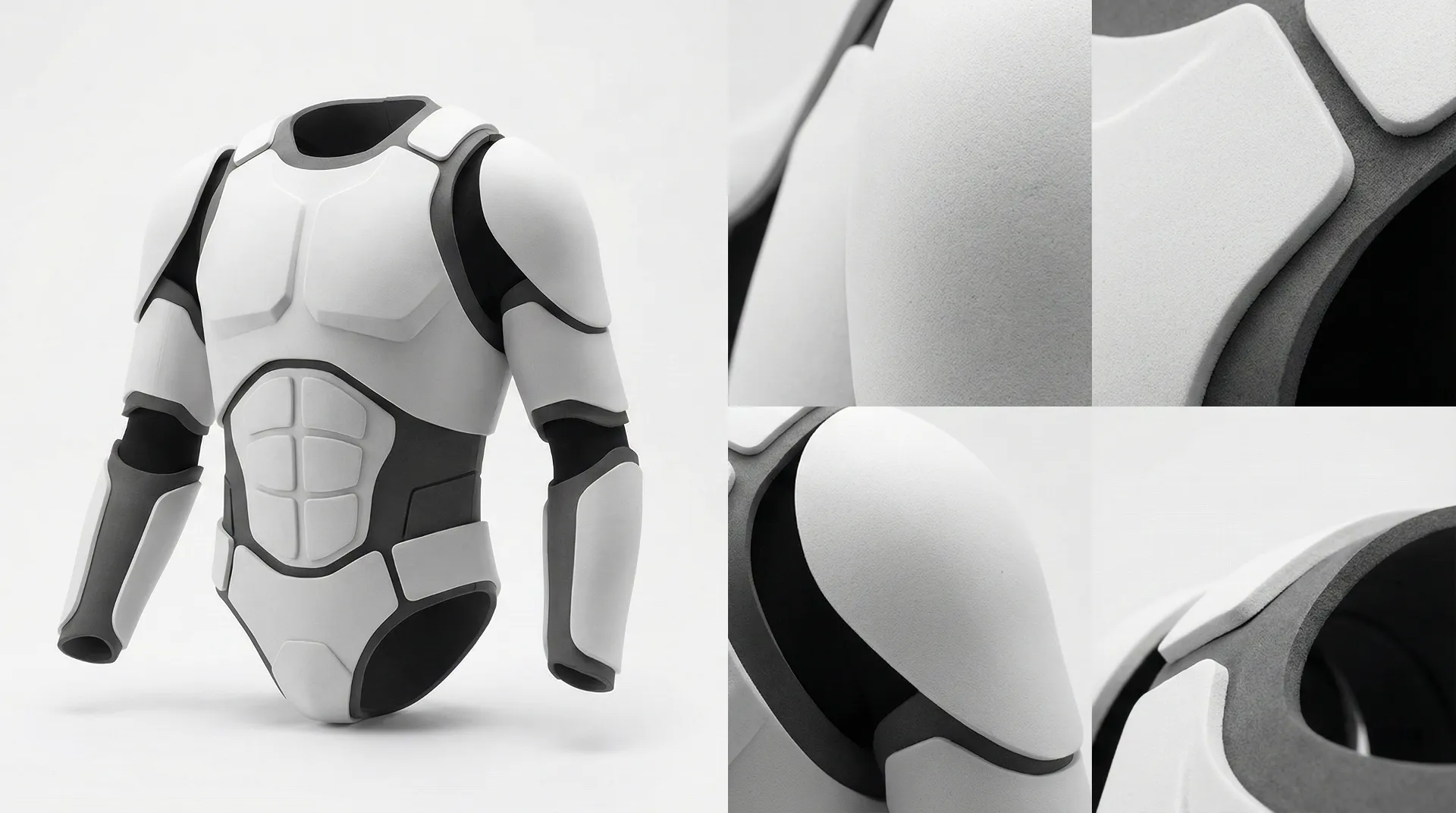
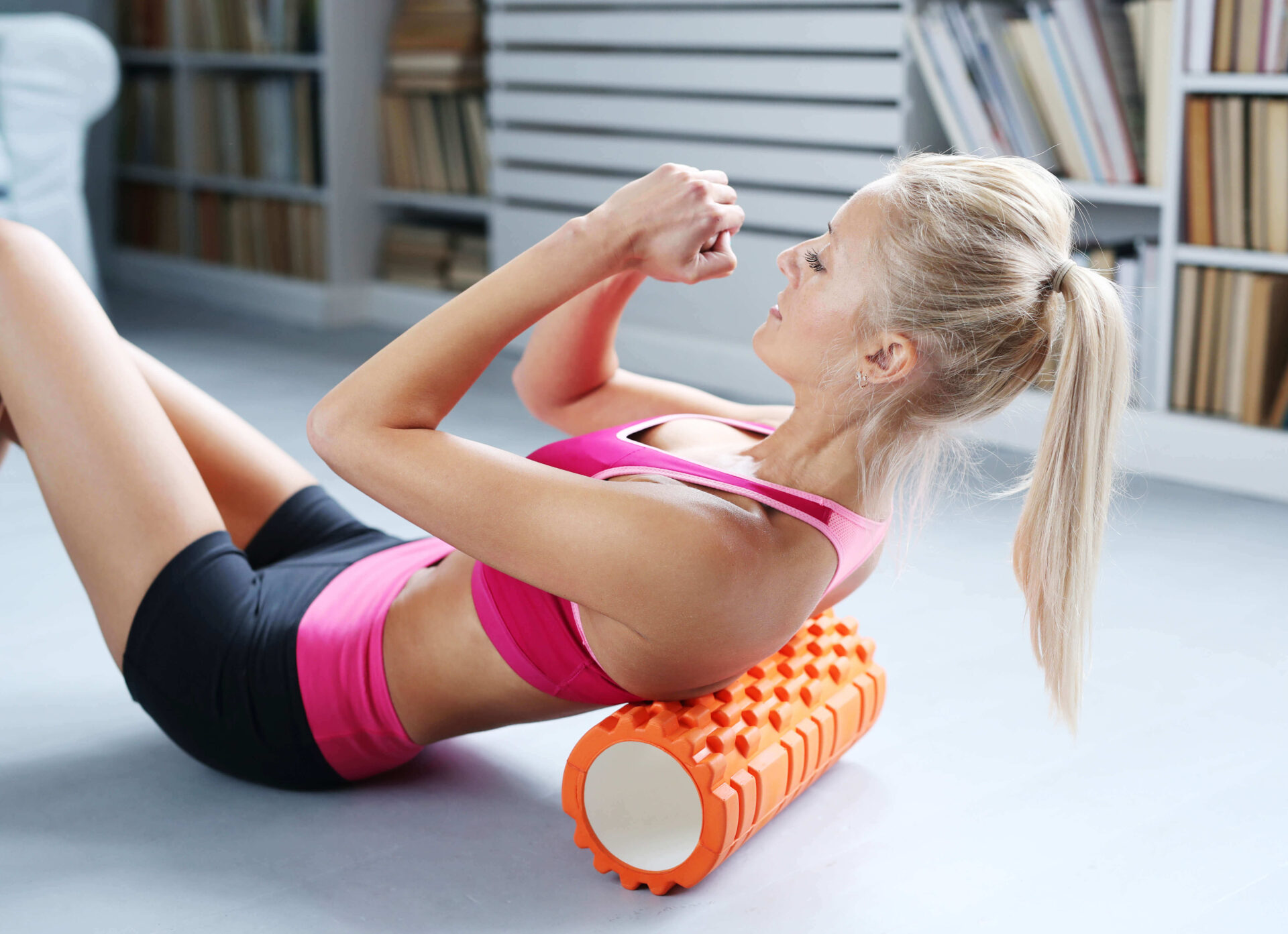
- Protective Equipment Guarding: Forms the rigid structural padding inside professional sports helmets and heavy orthopedic knee braces.
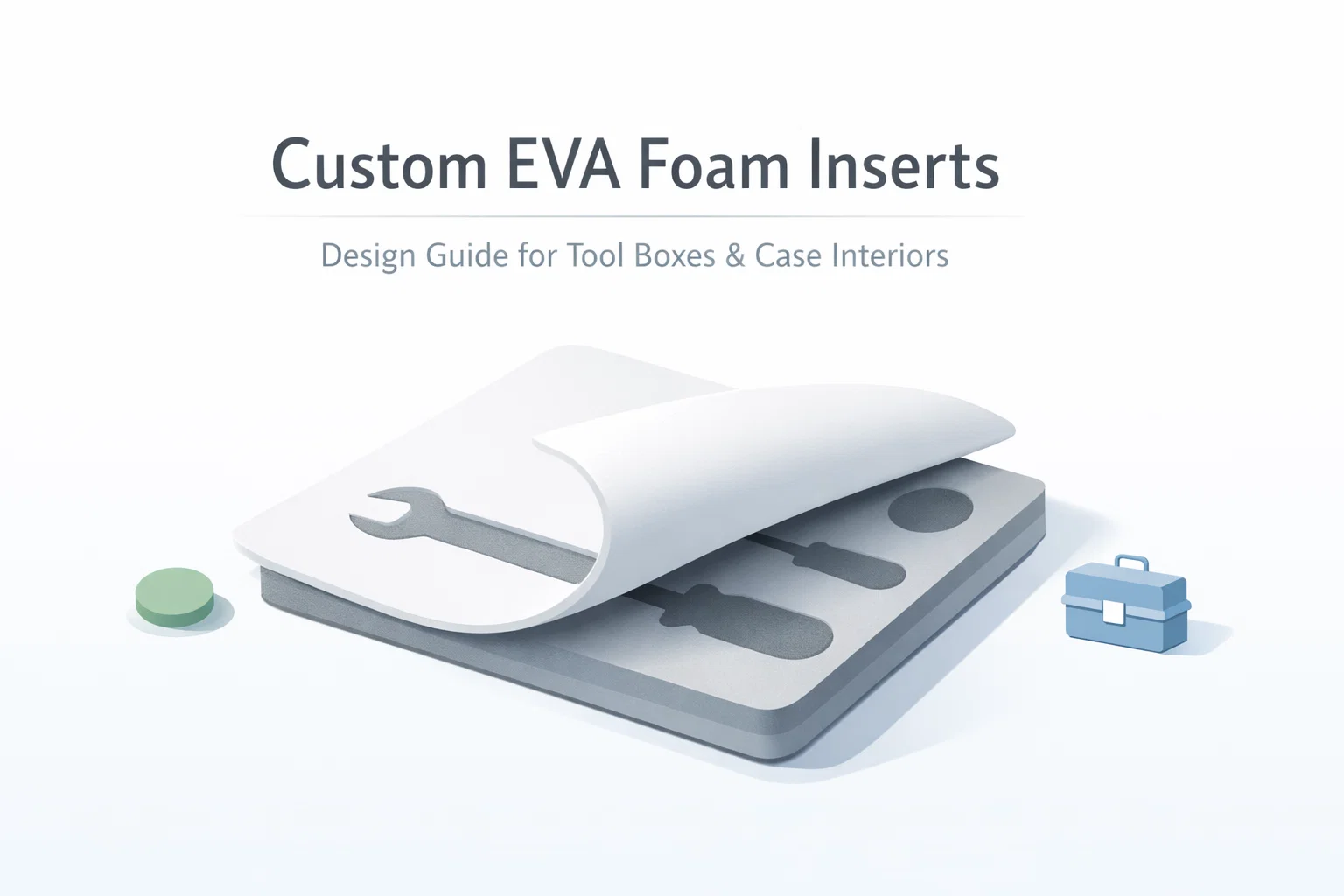
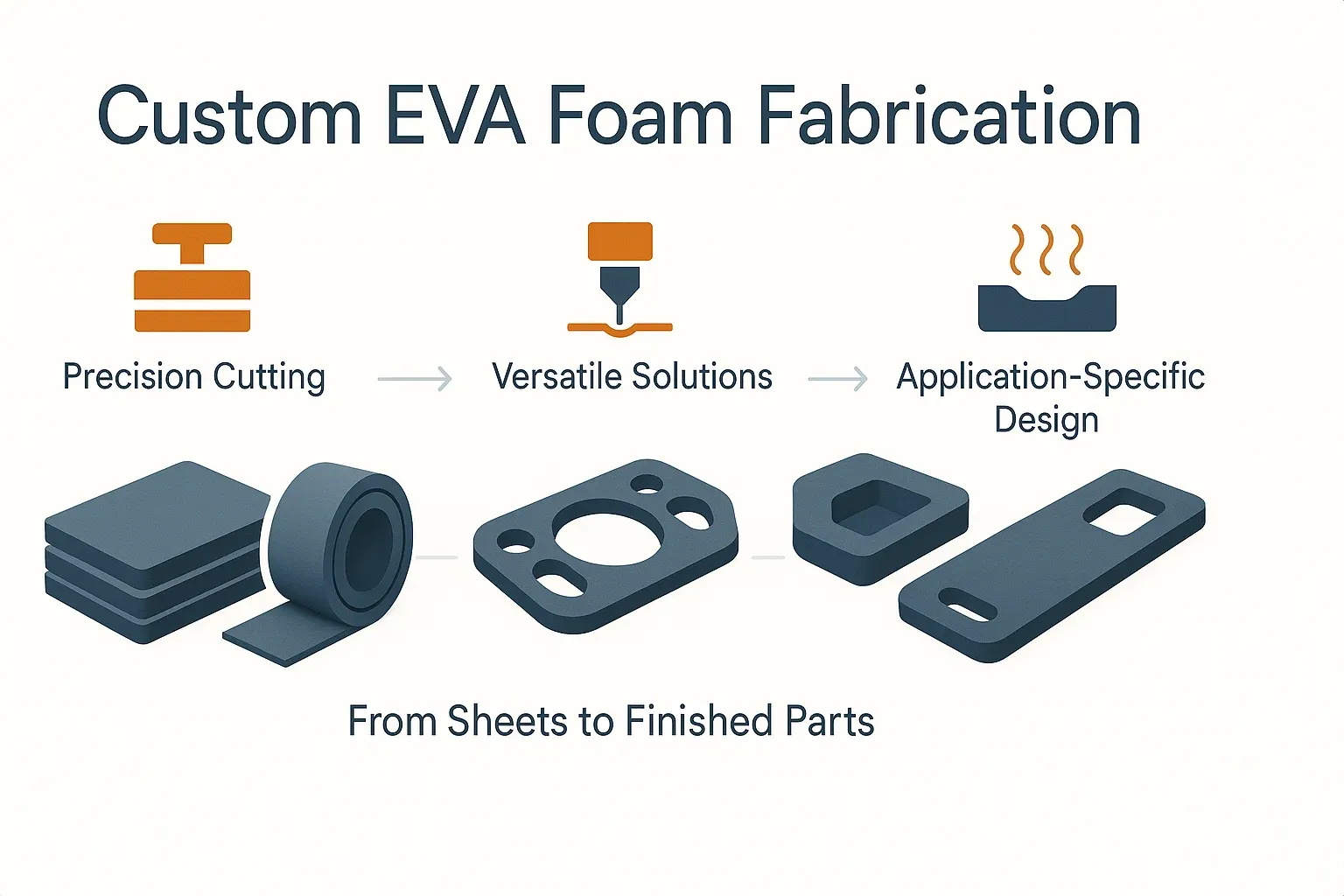
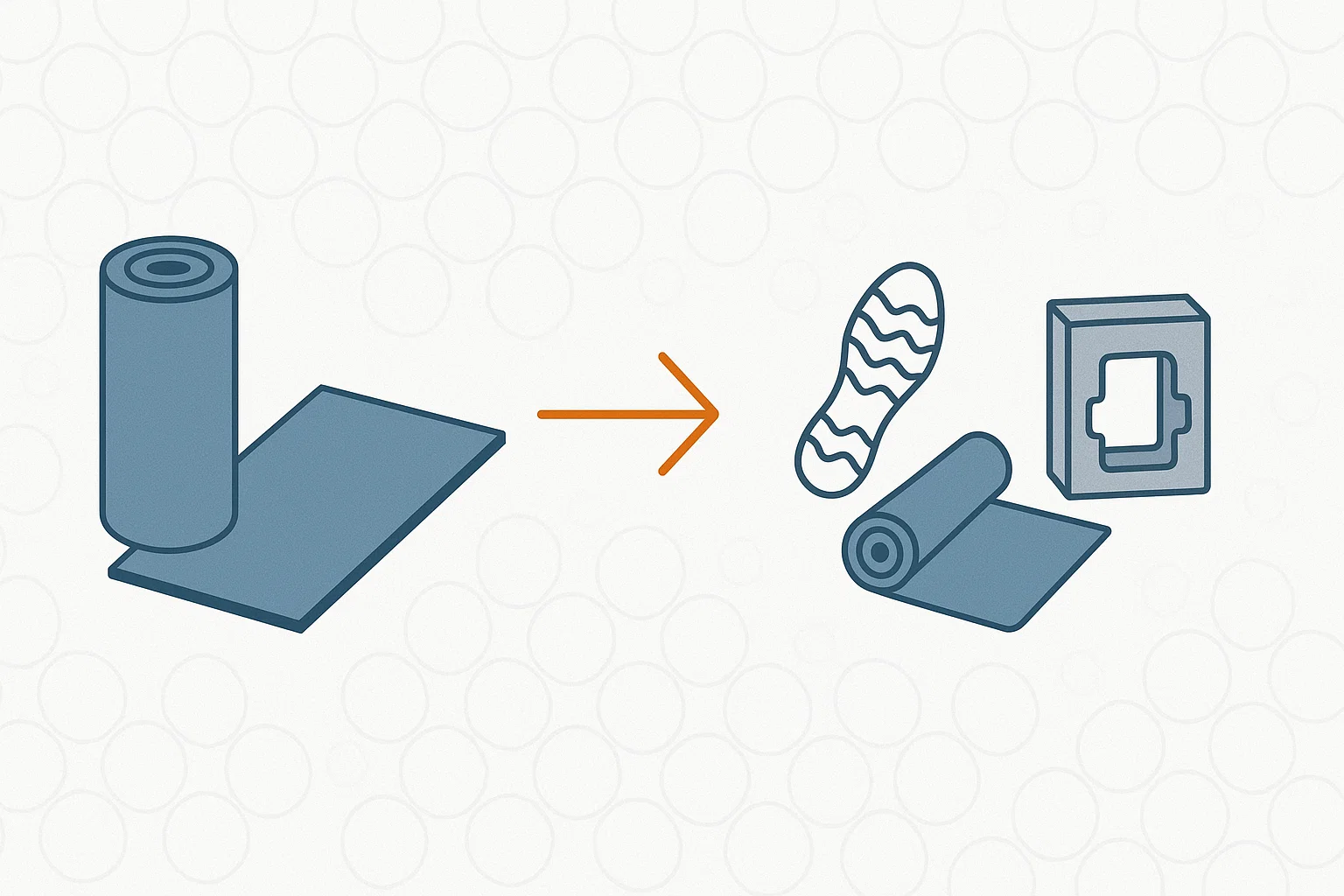
- Custom Tool Packaging: Engineers precisely CNC-route dense EVA sheets to physically lock expensive medical devices inside hard transport cases.
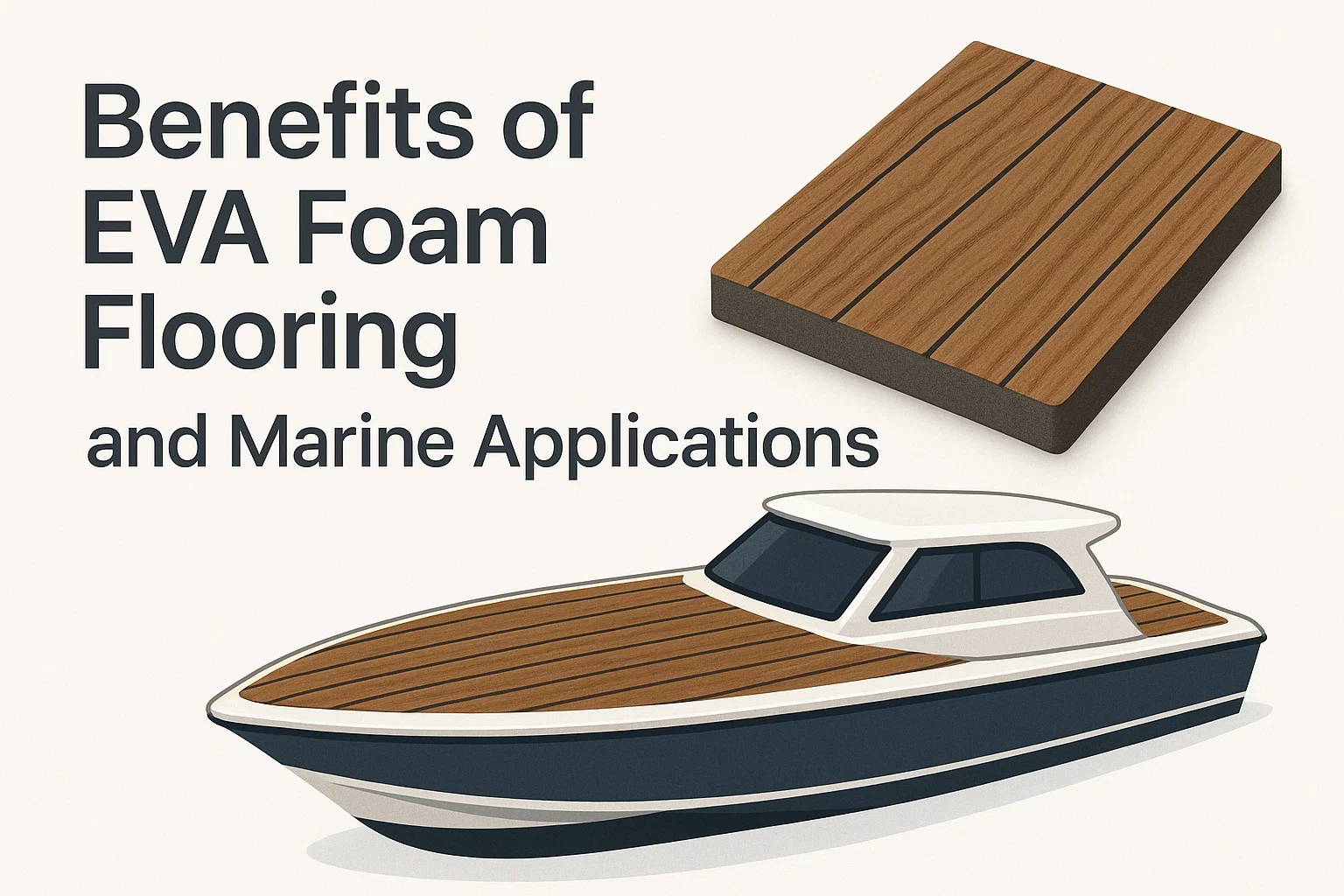
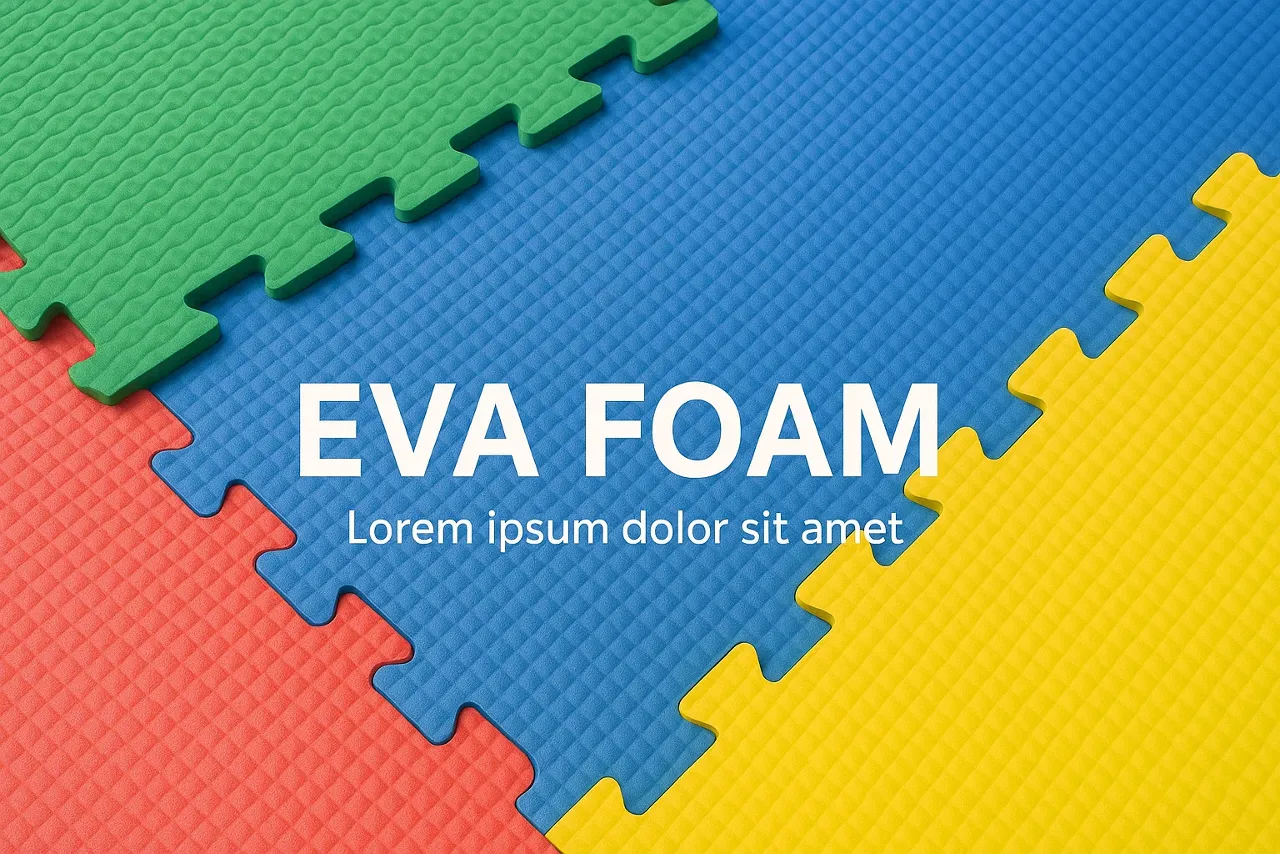
- Marine Traction Mats: Boat builders apply highly grooved EVA foam pads to boat decking to provide extreme anti-slip friction even in standing water.
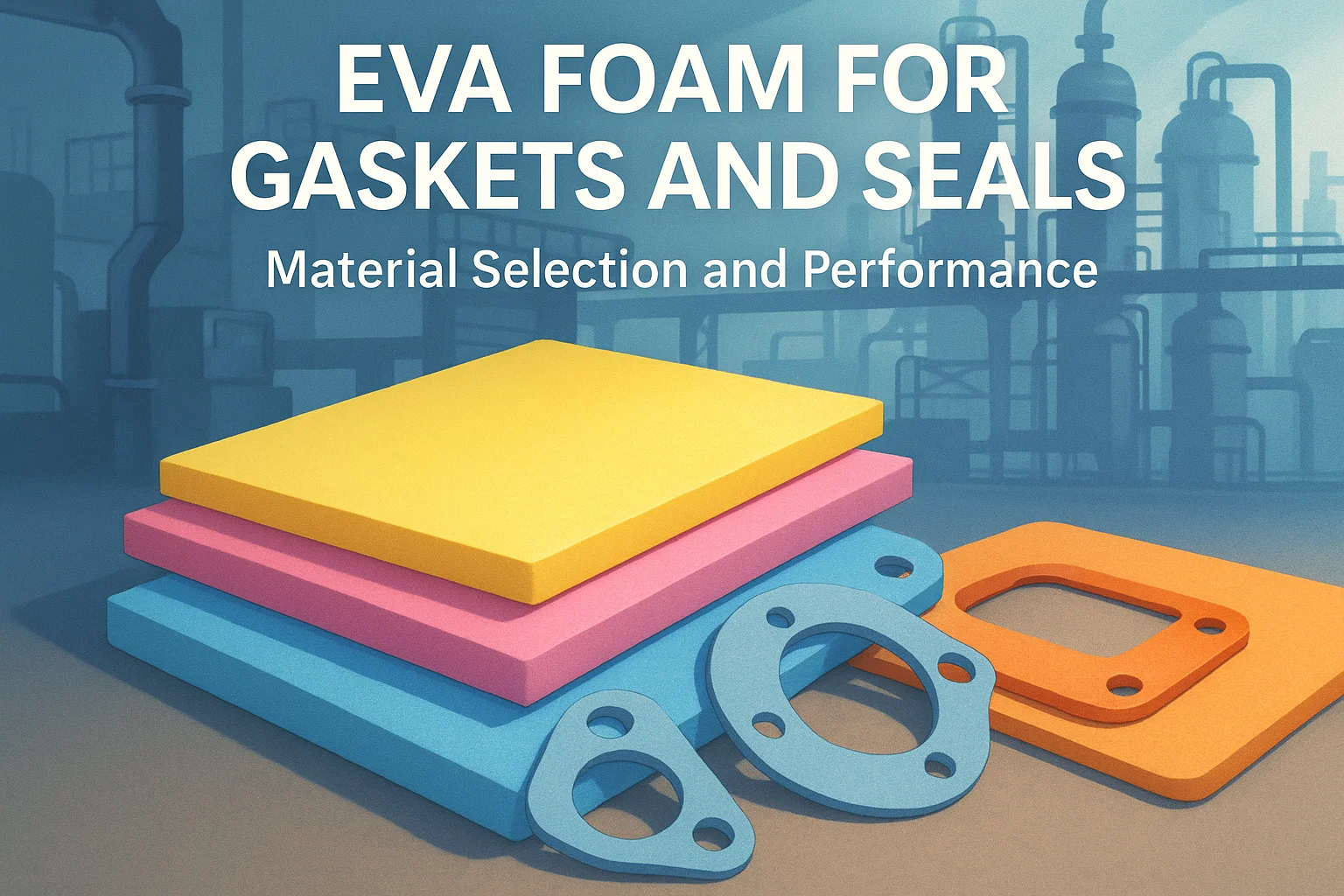
- Automotive Gasketing: Assembly lines cut thin EVA rolls into waterproof seals that prevent heavy vibration rattling between interior plastic dash panels.
Procuring the Finished Material
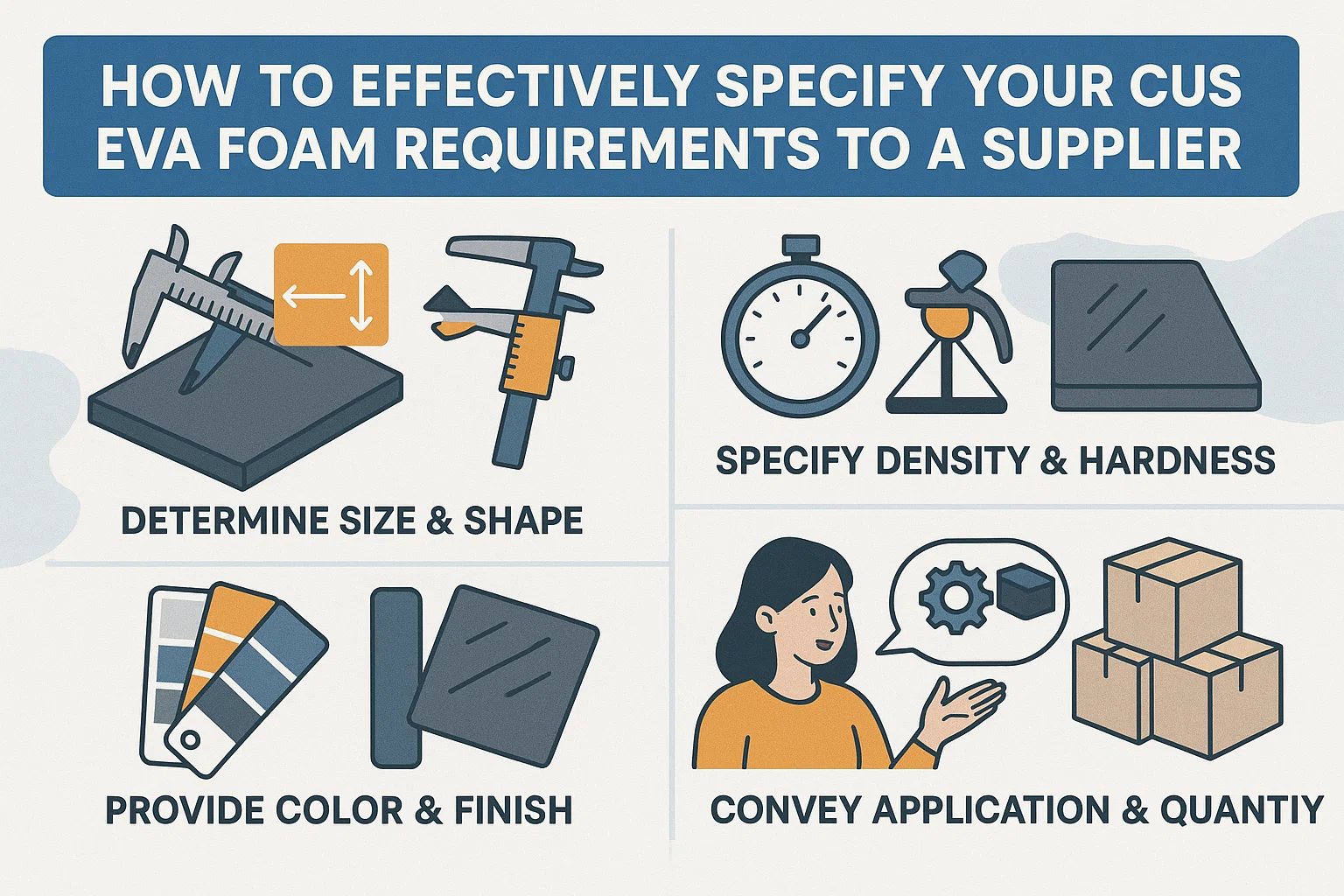
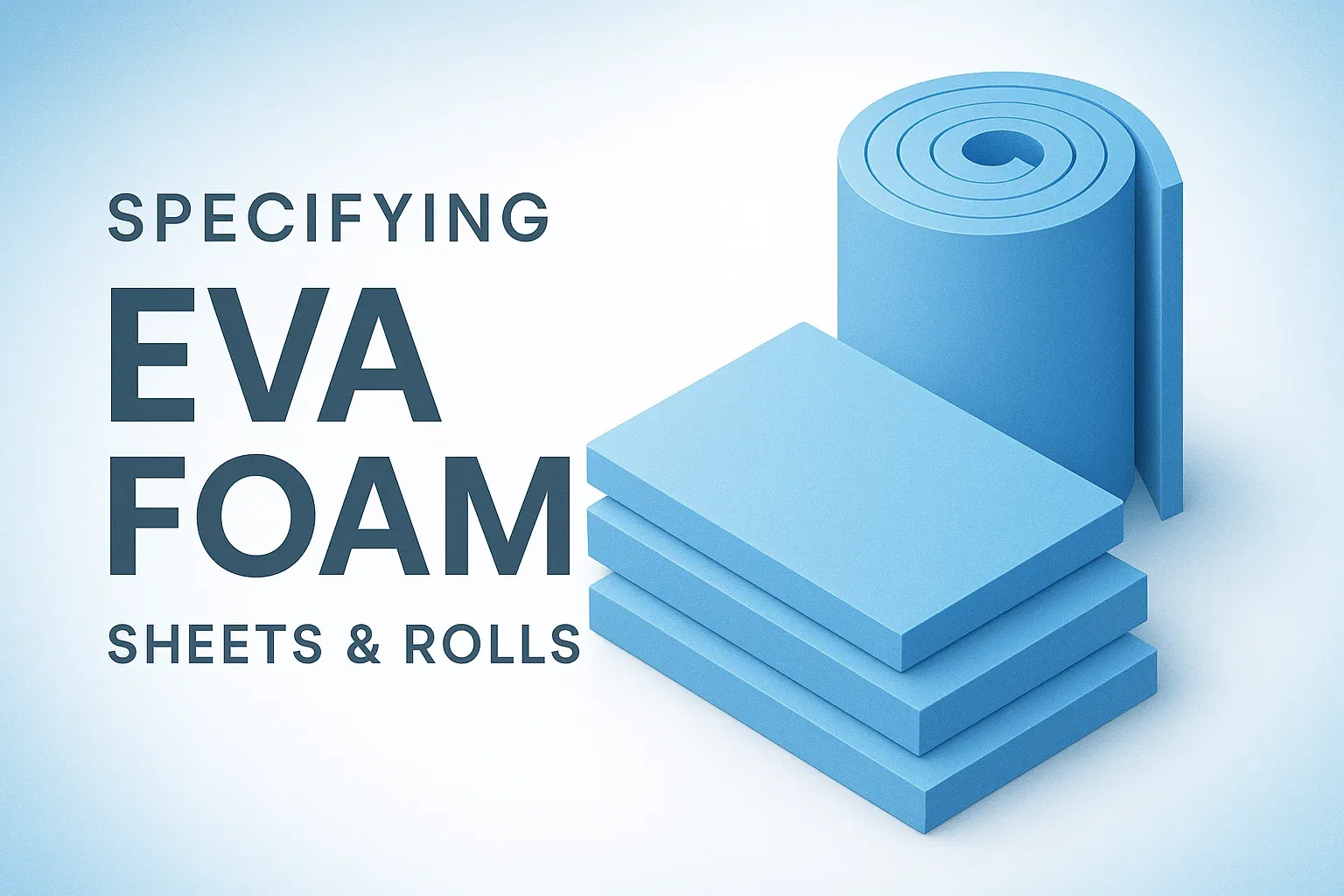
We supply raw EVA foam precisely configured for heavy commercial fabrication. Facilities typically order the material in specific structural formats:
- Raw Sheets and Massive Rolls: Perfect for large-scale die-cutting or heavy industrial floor covering.
- Custom CNC Fabrications: We precision-cut exact physical geometries so products drop securely into pre-configured retail packaging.
- Pressure Sensitive Backings (PSA): We laminate heavy 3M adhesive film directly onto the foam base for immediate peel-and-stick factory assembly.
Summary and Next Steps
EVA foam padding provides an absolute closed-cell barrier that absorbs extreme kinetic shocks while refusing to hold water. Match the material density to your exact structural requirement to secure permanent physical protection.
Explore our complete EVA foam technical specifications and contact our engineers today to test exact density sample blocks.
Frequently Asked Questions (FAQ)
Is EVA foam fully waterproof? Yes, EVA foam possesses a closed-cell physical structure. The closed plastic walls fundamentally prevent liquid moisture from soaking into the material base.
Is EVA foam physically durable? Absolutely. High-density EVA foam actively resists tearing and severe friction, maintaining its exact original shape even after absorbing thousands of repetitive kinetic impacts.
Can I leave EVA foam padding outdoors? Yes, high-grade EVA foam natively resists UV radiation and heavy weathering, allowing boat builders to use it permanently as structural marine decking.