EVA Foam Packaging Inserts for Electronics, Tools, and Medical Devices
- Damao Tech
- EVA Foam
- 03 May, 2026
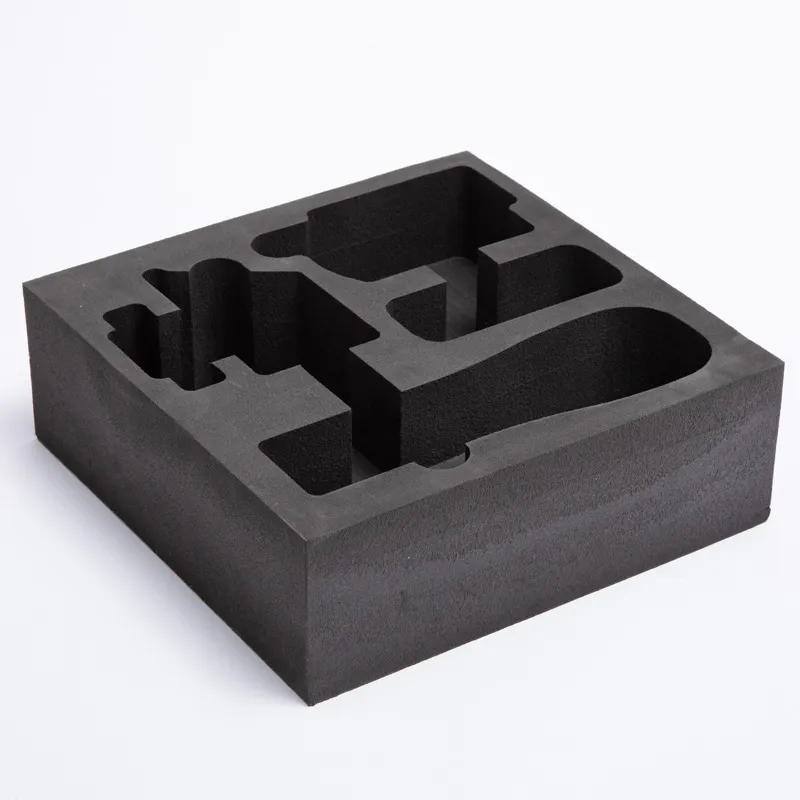
EVA foam packaging inserts protect products by holding each item in a stable, custom-fit cavity. Compared with loose void fill or generic foam blocks, a properly designed EVA insert controls movement, improves presentation, and helps reduce impact concentration during storage, handling, and shipping.
Damao Tech manufactures custom EVA foam for protective packaging inserts, equipment cases, branded product boxes, and industrial transport trays.
Why EVA Foam Works Well for Packaging Inserts
EVA foam is a closed-cell material with a balance of cushioning, resilience, water resistance, and clean surface appearance. These properties make it suitable for both protective and presentation packaging.
Key advantages include:
- Stable cushioning for fragile or high-value products.
- Smooth appearance for premium packaging.
- Good resistance to water absorption.
- Custom color options for branding or visual control.
- Compatibility with CNC routing, die cutting, lamination, and adhesive backing.
- Suitable grades for electronics, tools, medical kits, consumer products, and instruments.
For a broader packaging overview, read our EVA foam protective packaging guide.
Common Products That Use EVA Packaging Inserts
EVA inserts are often selected when the product must arrive undamaged and look organized when opened.
Typical use cases include:
- Consumer electronics and accessories.
- Diagnostic instruments and laboratory tools.
- Medical device kits.
- Hand tools, precision tools, and service kits.
- Cameras, lenses, and optical components.
- Luxury gifts and branded product sets.
- Industrial spare parts and sample kits.
For tool boxes and case interiors specifically, see our custom EVA foam inserts guide.
Design Factors That Control Protection
Good packaging insert design is not just about matching the product outline. It must support the product, absorb shock, and allow practical handling.
Important design factors:
- Product weight: heavier items need higher density and stronger support.
- Fragility: glass, electronics, and precision instruments may need more clearance and cushioning thickness.
- Pocket depth: the product should be secure but still easy to remove.
- Wall thickness: thin bridges between cavities can tear during repeated use.
- Surface finish: polished or painted products may need soft-touch lamination.
- Shipping method: parcel, pallet, air freight, and export packaging create different stress conditions.
A prototype should be tested with the actual product before mass production.
Material and Density Selection
Density affects both cushioning and appearance. Low-density EVA foam is softer and lighter, while high-density EVA foam offers stronger support and cleaner pocket edges.
| Product Type | Typical Insert Requirement | Material Focus |
|---|---|---|
| Lightweight accessories | Gentle cushioning | Lower to medium density |
| Electronics | Fit, ESD option, surface protection | Medium density with optional anti-static grade |
| Hand tools | Strong pocket walls | Medium to high density |
| Medical kits | Clean presentation and repeatable fit | Medium density with documented material control |
| Heavy industrial parts | Load support and deformation resistance | High density |
The final density should be confirmed by sample testing rather than selected from a catalog alone.
Fabrication Methods for Packaging Inserts
The best fabrication method depends on geometry and order volume.
- CNC routing: best for multi-depth cavities, finger pulls, and complex case interiors.
- Die cutting: cost-effective for high-volume flat inserts and repeatable profiles.
- Waterjet cutting: useful for intricate flat shapes without thermal edge effects.
- Lamination: adds fabric, flocking, color layers, or adhesive backing.
- Two-tone construction: helps users see missing tools or components immediately.
Learn more in our custom cut EVA foam guide.
RFQ Checklist for EVA Foam Packaging Inserts
Send these details to help the supplier quote accurately:
- Product dimensions, weight, and photos.
- CAD file or drawing of the insert layout.
- Outer box or case internal dimensions.
- Required foam color and surface finish.
- Desired pocket depth and extraction method.
- Order quantity and repeat demand.
- ESD, RoHS, REACH, or other compliance needs.
- Packaging method and shipping destination.
If your layout is not finalized, Damao Tech can help convert product dimensions into a manufacturable insert design.
Summary
EVA foam packaging inserts are valuable when protection, organization, and presentation all matter. The best insert design balances density, cavity layout, fabrication method, and real shipping conditions.
Damao Tech produces custom EVA foam packaging inserts for electronics, tools, instruments, medical kits, consumer products, and industrial components. Send your product dimensions or case drawing to start a sample review.